Waikīkī
Best for
First-timers, beachfront resort access, surfing, high-density shopping, and dense nightlife.
 AdventriaLocalOpen App
Local Practical Planning & Decision Framework
Trying to decide what to do in Honolulu? Adventria helps you cut through the options and choose a good-enough plan without endless scrolling. Whether you are a resident looking to bypass Waikīkī traffic, a solo traveler using transit, or a family coordinating tight reservation windows for Lēʻahi and Hanauma Bay, this guide breaks down real-world timing, neighborhood friction, and culinary logic across Honolulu.
The local decision problem
Navigating neighborhood trade-offs, strict conservation reservations, linear traffic bottlenecks, and distinct coastal microclimates across urban Oahu.
That is where Adventria comes in. Adventria helps narrow the options in Honolulu around practical factors like location, distance, budget, vibe, who you are with, and the kind of experience you actually want, so research can turn into a decision.
Let Adventria narrow the optionsPick the right part of town
Different parts of Honolulu work for different kinds of plans. Start with the experience you want, then narrow the map.
Best for
First-timers, beachfront resort access, surfing, high-density shopping, and dense nightlife.
Best for
Modern high-rise living, street art mural walks, craft microbreweries, and expansive open-air retail.
Best for
Hawaiian royal history, state civic architecture, walkable art galleries, and business-day exploration.
Best for
Dim sum, open-air fresh produce markets, craft cocktail bars, speakeasies, and historic theatre.
Best for
Classic local eateries, boutique retail, plate lunches, malasadas, and neighborhood chef-driven dining.
Best for
Rainforest nature walks, university enclave vibe, casual izakayas, and noodle houses.
This is a quick starting point. The full guide covers 8 local neighborhoods and districts in Honolulu.
Eat & drink
When the decision is less about what to do and more about where to eat or grab a drink, start here. These local cues narrow the food and drink decision without turning dinner or a night out into another hour of comparison.
Head northwest into Kalihi for James Beard award-winning traditional Hawaiian cuisine like kalua pig, laulau, pipikaula, and fresh poi. Alternatively, explore Kapahulu Avenue or Kaimukī for casual plate lunches featuring beef stew and loco moco. To enjoy popular local counters without lengthy wait times, aim for early lunch around 11:00 AM before signature menu items sell out.
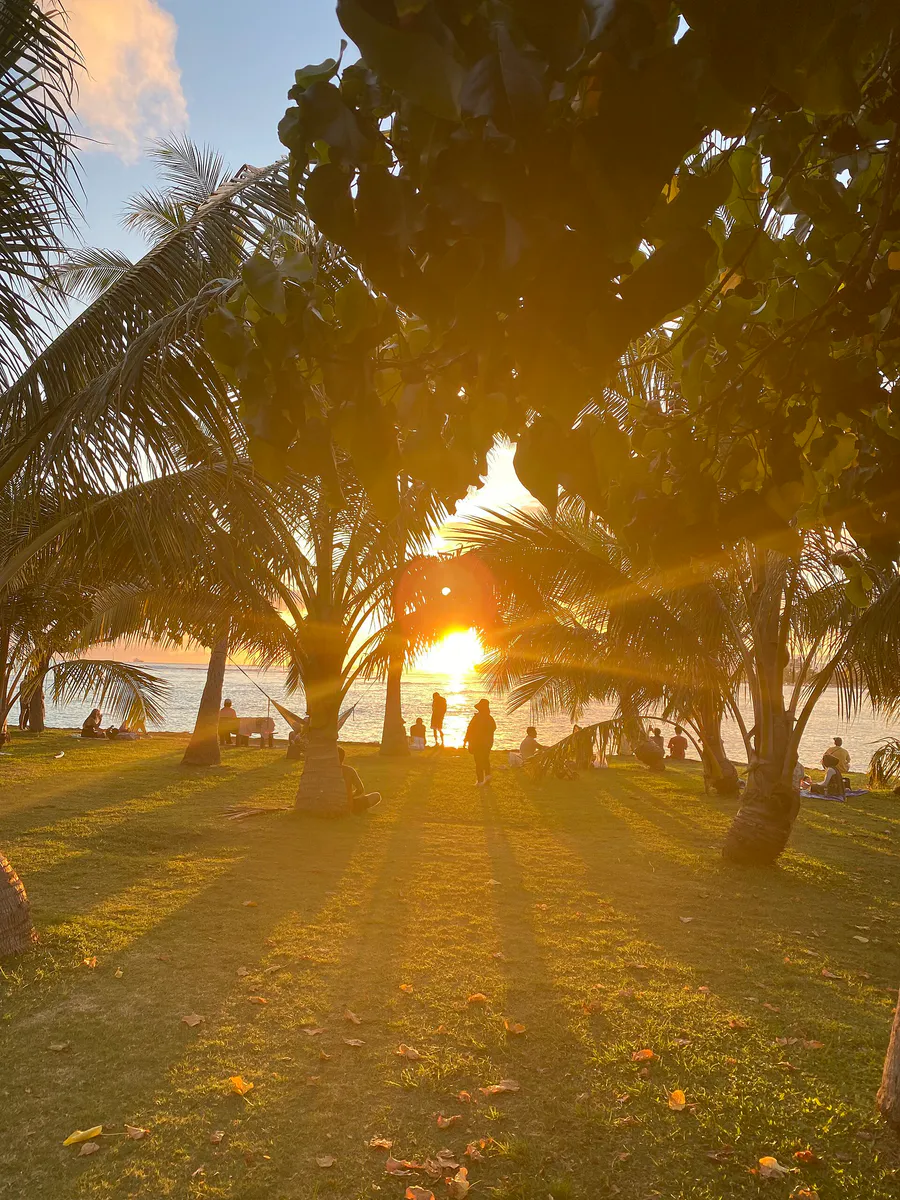
Start with an early evening picnic or stroll around Magic Island at Ala Moana Regional Park to catch the sunset looking back toward Lēʻahi. Transition west into Chinatown for craft cocktails in restored brick speakeasies, followed by a show at the historic 1922 Hawaii Theatre or a chef-driven dinner along Waiʻalae Avenue in Kaimukī. Cap off the night with a scenic drive up Tantalus Lookout for panoramic night vistas.
Still comparing options? Adventria can narrow the choice around budget, distance, vibe, and who you are with.
Decide with AdventriaPlan by situation
Start with the kind of plan you are actually trying to make. These city-specific ideas narrow the choice around who you are with, what you want to spend, the weather, and the kind of outing you want.
Target the calm protected ocean lagoon at Ala Moana Beach Park early in the morning to beat the heat and park easily. After swimming, move adjacent to Kapiʻolani Park at the east end of Waikīkī to visit the Honolulu Zoo or Waikīkī Aquarium. For a cool afternoon indoor break, head to the interactive science center and planetarium at the Bishop Museum.
If Diamond Head summit permits are fully booked, hike the Makapuʻu Point Lighthouse Trail or Koko Head Crater stairs for dramatic ocean vistas without advance reservation systems. If Hanauma Bay is unavailable, swim inside the protected seawall lagoons at Ala Moana Beach Park or Sans Souci Beach near Kapiʻolani Park.
Avoid high valet and garage parking costs by using TheBus and the automated Skyline light metro. Tap a HOLO card for your initial $3.00 ride; once you spend $7.50 in a single day, all subsequent rides on buses and trains are completely free. Major hubs at Ala Moana Transit Center and Middle Street connect all major urban districts.
Buy or load a HOLO card for capped daily transit rides. Take TheBus or Skyline metro to Kalihi to tour the Bishop Museum, then ride into Downtown Honolulu to visit Capitol Modern (always free). Rent a Biki bike to ride down the King Street protected bike lane into Kakaʻako for street art, and finish your day watching the sunset at Ala Moana Beach Park.
For an outdoor plan from Honolulu, compare trails, state parks, and national parks within trip range. Options in the current city guide include Makiki Valley State Recreation Area and Puu Ualakea State Wayside.
Base your group at SALT at Our Kakaʻako or Ala Moana Center’s open-air concourses, where diverse dietary preferences can be satisfied across multiple vendor counters in a shared seating space. Pair dining with open-air activities at Ala Moana Regional Park or a evening lawn concert at the Tom Moffatt Waikīkī Shell.
For a day trip from Honolulu, compare Kihei and Lahaina. More options are listed in the trip section below.
Outdoors nearby
Use these nearby outdoor options when the plan calls for a trail, protected landscape, park, or drive instead of another indoor stop. Proximity here is geographic, not a promise about driving time.
Get out of town
When staying in town is not the answer, these nearby destinations give you a smaller starting set for a day trip, overnight escape, or weekend away.
Destination relationships are screened geographically. Straight-line proximity is not presented as road mileage or estimated travel time.
Local landmarks & attractions
These notable destinations offer a starting point when you want something specific to see, visit, or build into a day around Honolulu. Distances are approximate from the city area.
zoo in Queen Kapiʻolani Park in Honolulu, Hawaiʻi, US
art museum in Honolulu, Hawaii
state capitol building of the U.S. state of Hawaii
aquarium in Honolulu, Hawaii, United States
memorial to soldiers killed on the USS Arizona during the attack on Pearl Harbor
theatre and movie theater in downtown Honolulu, Hawaii
observation tower at Honolulu Harbor, Hawaii, United States
national cemetery in Honolulu, Hawaii
Notable places are selected from structured public destination data and ranked for relevance, prominence, proximity, and variety.
Local decision signals
A useful local recommendation depends on how the city actually works. These conditions affect where to go, what to do, and whether a plan makes sense right now.
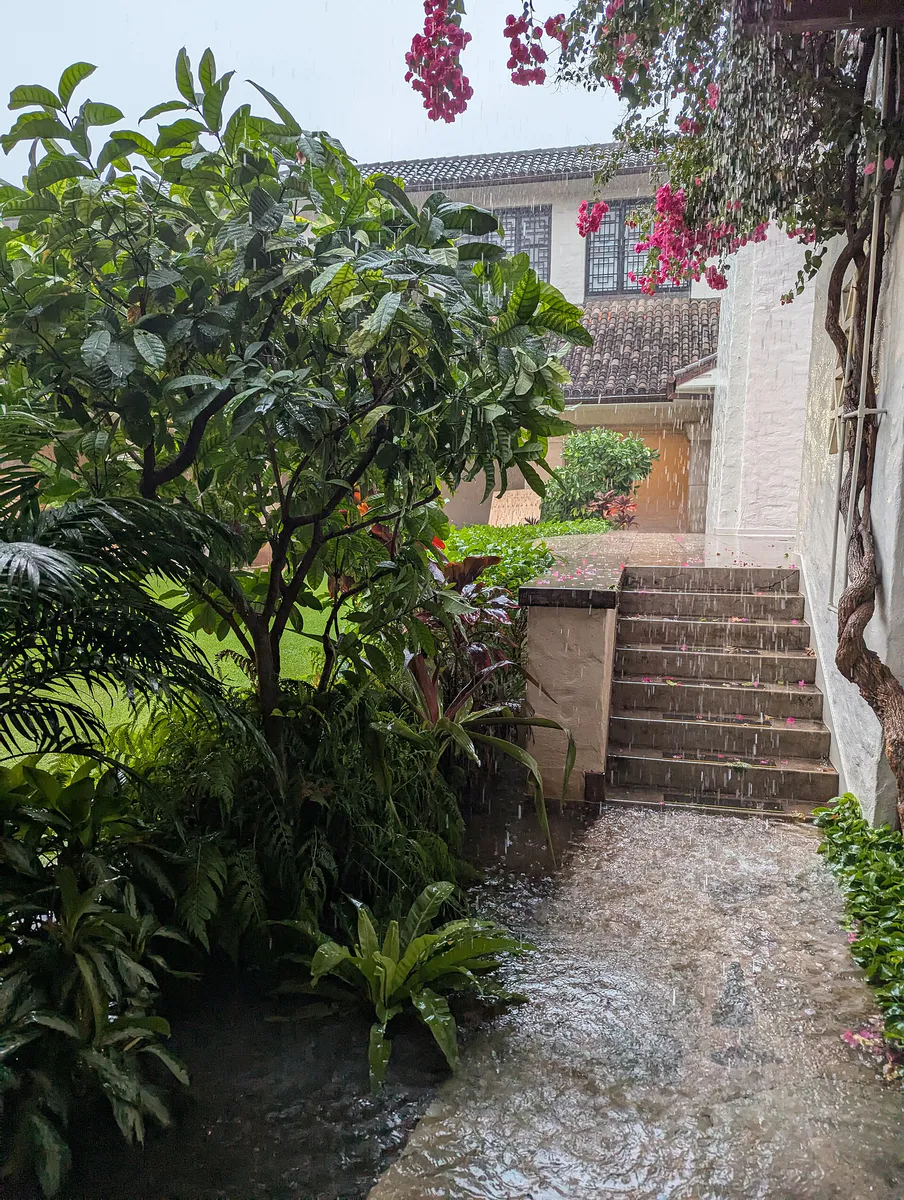
Honolulu sits in the rain shadow of the Koʻolau Mountains. Downpours in Mānoa or Nuʻuanu valley rarely reach the coast; Ala Moana and Waikīkī beaches stay dry and sunny just two miles away.
South Shore waters experience predictable box jellyfish swarms approximately 8 to 10 days after a full moon, affecting Waikīkī and Ala Moana swimming conditions.
Tapping a HOLO card automatically caps daily public transit spend at $7.50 for unlimited rides on both TheBus and Skyline light metro.
Westbound traffic exiting Downtown and Kakaʻako on Interstate H-1 peaks between 3:30 PM and 6:30 PM. Moving across valleys during this window can triple travel time.
Hanauma Bay online reservations release 48 hours in advance at 7:00 AM HST; Diamond Head summit hiking permits open 30 days in advance for non-residents.
Free and metered spaces at Ala Moana Regional Park and Kapiʻolani Park reach total capacity by 7:30 AM to 8:30 AM on weekends and holidays.
Local bakeries and breakfast counters open by 5:30 AM; popular counter-service plate lunch joints frequently run out of daily specials by 1:30 PM.
Neighborhood context
Neighborhoods are not interchangeable. Each area offers a different balance of atmosphere, transportation, food, nightlife, activities, and planning friction.
Best for: First-timers, beachfront resort access, surfing, high-density shopping, and dense nightlife.
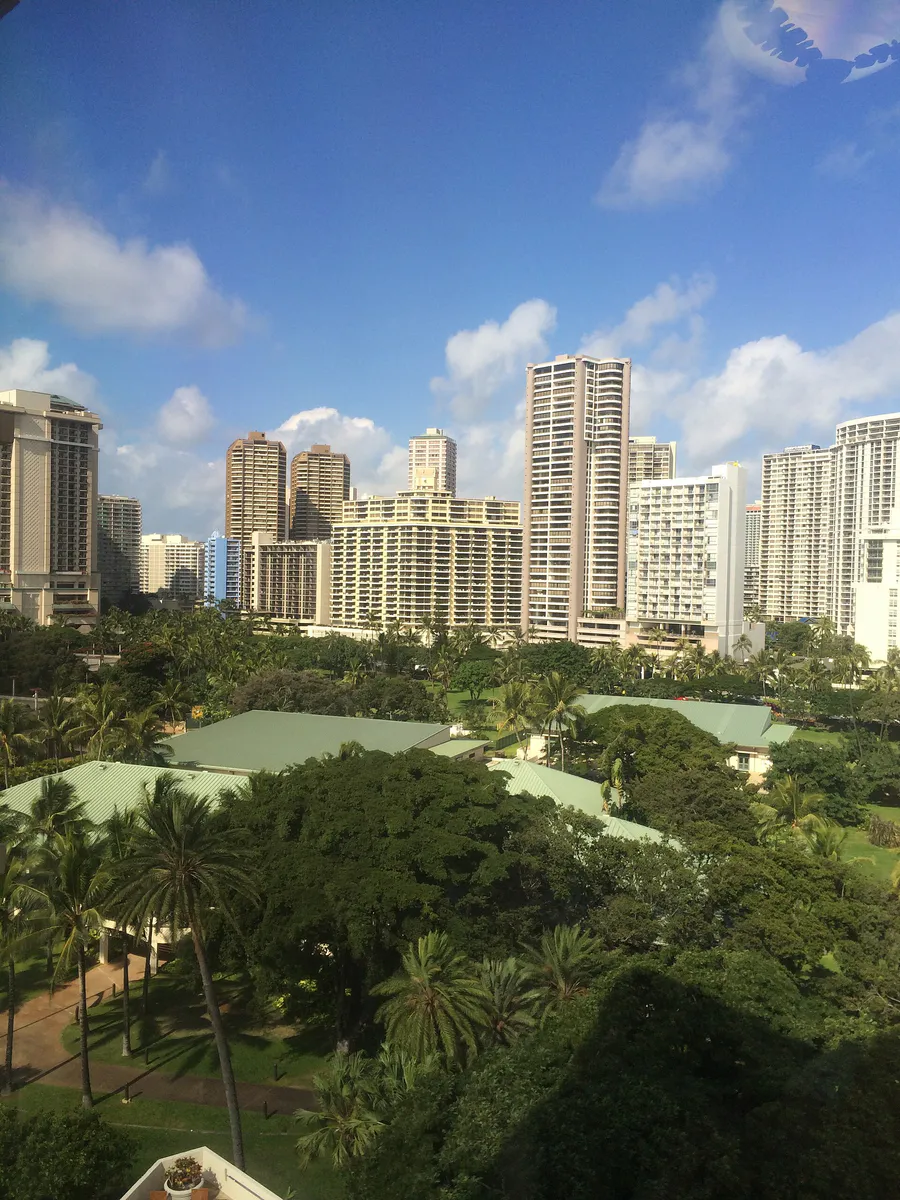
A high-rise resort enclave framed by the ocean, Ala Wai Canal, and Lēʻahi (Diamond Head). Extremely walkable with direct beach access, though hotel parking fees are exceptionally high and vehicle traffic is dense.
Best for: Modern high-rise living, street art mural walks, craft microbreweries, and expansive open-air retail.
Situated directly west of Waikīkī. Features Ward Village, the open-air SALT at Our Kakaʻako development, craft taprooms, and the massive 100-acre Ala Moana Regional Park and Magic Island lagoon.
Best for: Hawaiian royal history, state civic architecture, walkable art galleries, and business-day exploration.
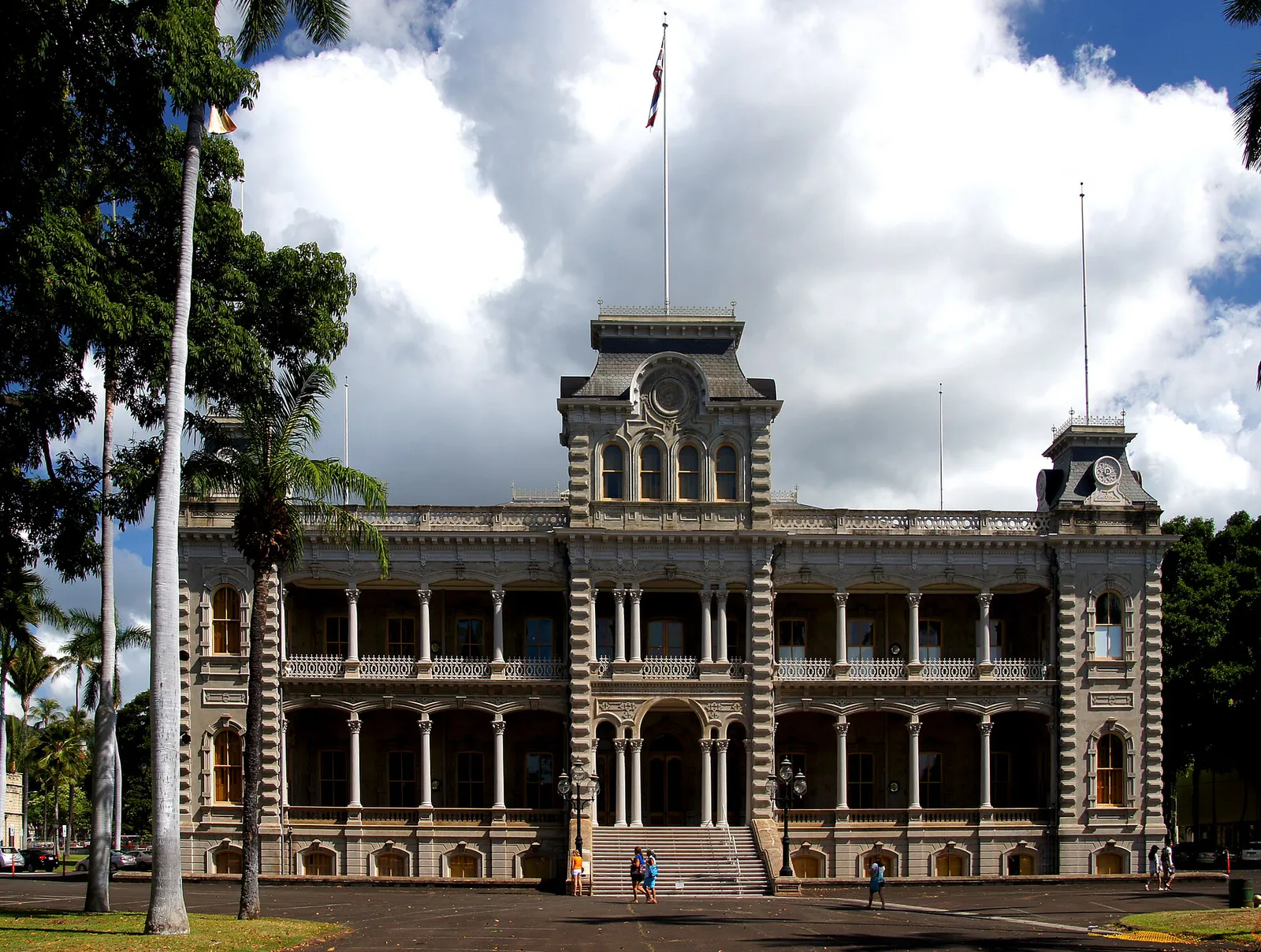
The administrative and historical heart of Hawaii. Contains ʻIolani Palace, Aliʻiōlani Hale, the Hawaii State Capitol, and Capitol Modern museum. Active during business hours but quiet on evenings and weekends.
Best for: Dim sum, open-air fresh produce markets, craft cocktail bars, speakeasies, and historic theatre.
A historic 20-block district directly adjacent to Downtown. Known for red-brick storefronts, traditional herbalists, indie live music venues, and vibrant First Friday art walks.
Best for: Classic local eateries, boutique retail, plate lunches, malasadas, and neighborhood chef-driven dining.
Stretching inland east of Waikīkī. Kapahulu Avenue is a major food corridor, while elevated Kaimukī along Waiʻalae Avenue offers vintage charm, coffee houses, and independent boutiques.
Best for: Rainforest nature walks, university enclave vibe, casual izakayas, and noodle houses.
Inland valley districts north of Waikīkī. Home to the University of Hawaiʻi at Mānoa, Lyon Arboretum, and Mānoa Falls Trail, surrounded by historic residential architecture.
Best for: Authentic traditional Hawaiian food, heritage bakeries, and deep Polynesian cultural history.
Working-class residential and industrial neighborhoods northwest of Downtown. Home to the legendary Bishop Museum and renowned traditional eateries.
Best for: Coastal marine preserves, volcanic crater hiking, and suburban ocean adventures.
A suburban marina district located at Oahu’s southeastern tip. Anchored by natural landmarks including Hanauma Bay, Koko Head Crater, and Sandy Beach.
Honolulu local guide
Honolulu’s urban landscape is defined by tight natural boundaries. Squeezed into a narrow strip along Oahu’s south shore, the city lies between the Pacific Ocean and the sharp ridges of the 3,000-foot Koʻolau Mountain Range. Arterial traffic moves almost entirely east-to-west along parallel corridors: Interstate H-1, Nimitz Highway (Highway 92), and Kalanianaʻole Highway (Highway 72). Understanding this linear structure helps prevent unnecessary transit delays.
Inland neighborhoods such as Mānoa, Palolo, and Kalihi sit inside steep, enclosed valleys. Because high mountain ridges separate these valleys, cross-town travel requires descending back down to the H-1 corridor or King Street before heading inland again. Commuters face heavy morning bottlenecks eastbound into Downtown and Waikīkī from West Oahu, while evening rush hours reverse this gridlock westbound between 3:30 PM and 6:30 PM.
Microclimates play a crucial role in daily planning. High mountain peaks catch trade winds, creating localized rainfall inland. As a result, Mānoa Valley can experience rain showers while Waikīkī and Ala Moana, situated just two miles south in the mountain rain shadow, enjoy sunny skies. Checking weather radar rather than island-wide forecasts ensures better timing for outdoor activities.
Explore your options
Match your day's priorities against the practical advantages, transit access, and parking realities of Honolulu's key districts.
Best for concentrated beachfront activity, ocean sports, and resort dining within a dense, highly walkable strip.
Ideal for modern retail, craft taprooms, visual arts, and family-friendly beach park lagoons.
Perfect for history enthusiasts, architectural tours, traditional dim sum, and indie cocktail lounges.
The premier corridor for authentic local culinary runs, casual plate lunch joints, and vintage boutiques.
A simpler way to decide
Follow this step-by-step framework to maximize your time, manage parking friction, and transition seamlessly between activities.
Arrive at Ala Moana Regional Park or Kapiʻolani Park before 7:30 AM to secure free or metered parking before spots fill up. Enjoy morning ocean swimming or paddleboarding while water conditions are calm.
Head into Downtown or Kalihi around 9:30 AM to explore ʻIolani Palace, Capitol Modern, or the Bernice Pauahi Bishop Museum before peak mid-day crowds.
Beat the lunch rush by ordering a traditional Hawaiian plate lunch or fresh poke by 11:30 AM along Kapahulu Avenue or in Kalihi.
Park your vehicle in a Kakaʻako structure or hop on a Biki bike to explore street art murals around Ward Village and SALT at Our Kakaʻako.
Watch the sunset from Magic Island, then transition into Chinatown for craft cocktails, live acoustic Hawaiian music, or local taprooms.
Common local questions
These are common situations people face when trying to decide where to eat, what to do, where to get drinks, or how to spend their time in Honolulu.
Honolulu planning questions
Practical answers for people deciding where to eat, what to do, where to go, or how to make plans in Honolulu.
The HOLO card is an electronic fare card shared by TheBus and Skyline light metro. Tapping the card deducts a single fare (including a 2.5-hour transfer window). Daily expenditure is capped at $7.50; once reached, all subsequent rides that day are free.
A rental car is not strictly necessary if staying within urban Honolulu (Waikīkī, Kakaʻako, Ala Moana, Downtown, Kaimukī), which are well connected by TheBus, Biki bikeshare, and rideshares. However, a car is helpful for trips to North Shore beaches or suburban hiking trails.
Non-resident online reservation slots open exactly 48 hours in advance at 7:00 AM HST via the City & County of Honolulu Parks online portal. Because tickets sell out within minutes, create your account and log in before 7:00 AM sharp.
No. All non-Hawaii residents must book online entry and parking reservations up to 30 days in advance. Hawaii residents enter free without reservations upon presenting a valid State ID.
Ala Moana Regional Park and Kapiʻolani Park offer free public parking, though lots fill before 8:00 AM on weekends. In Kakaʻako and Downtown, municipal parking garages and metered street spaces are available.
Aim for an early lunch between 11:00 AM and 11:45 AM. Popular local spots experience long lines by noon and often sell out of signature daily specials by 1:30 PM.
South Shore beaches (Waikīkī, Ala Moana) experience larger surf swells during summer (May to September). During winter (November to March), South Shore waters are calm, while massive world-class waves hit the North Shore.
Capitol Modern (Hawaiʻi State Art Museum) in Downtown offers free admission to contemporary Hawaii artwork. Additionally, walking tour murals in Kakaʻako, public parks like Magic Island, and self-guided historic architecture walks in Downtown cost nothing.
Kona storms bring island-wide humidity and rain. Pivot to indoor cultural venues like the Bishop Museum, Honolulu Museum of Art (HoMA), or indoor shopping concourses at Ala Moana Center and Royal Hawaiian Center.
Avoid driving westbound out of Honolulu along Interstate H-1 between 3:30 PM and 6:30 PM. Plan dinner, museum visits, or shopping within Downtown, Kakaʻako, or Waikīkī until traffic clears.
Source transparency
Official and locally relevant sources used to verify the practical information presented in this Honolulu decision guide.
Honolulu decision engine
Tell Adventria what kind of experience you want, set your practical limits, and turn the options in Honolulu into one workable plan.
Choose a Honolulu Plan