Back Bay
Best for
polished dates, architecture, shopping, indoor-outdoor combinations, and first-time visitors
 AdventriaLocalOpen App
Boston local decision guide
Trying to decide what to do in Boston? Adventria helps you cut through the options and choose a good-enough plan without endless scrolling. Boston compresses historic streets, waterfront walks, college districts, neighborhood restaurants, museums, sports, nightlife, and green space into a relatively compact city. The useful question is not what Boston offers, but which version of Boston fits your time, budget, energy, weather, and company right now.
The local decision problem
Boston puts many worthwhile choices close together, but the best plan changes sharply by neighborhood, weather, event traffic, walking tolerance, transit access, and whether the group wants history, food, nightlife, open space, or a low-effort indoor option.
That is where Adventria comes in. Adventria helps narrow the options in Boston around practical factors like location, distance, budget, vibe, who you are with, and the kind of experience you actually want, so research can turn into a decision.
Let Adventria narrow the optionsPick the right part of town
Different parts of Boston work for different kinds of plans. Start with the experience you want, then narrow the map.
Best for
polished dates, architecture, shopping, indoor-outdoor combinations, and first-time visitors
Best for
historic atmosphere, short walks, visitors, photography, and classic Boston scenery
Best for
food-centered outings, visitors, harbor walks, and plans built around one memorable meal
Best for
sports, concerts, museums, college energy, and active nights out
Best for
restaurant-focused dates, neighborhood wandering, small groups, and a less tourist-centered evening
Best for
parks, casual neighborhood days, families, dogs, and mixed indoor-outdoor plans
This is a quick starting point. The full guide covers 7 local neighborhoods and districts in Boston.
Eat & drink
When the decision is less about what to do and more about where to eat or grab a drink, start here. These local cues narrow the food and drink decision without turning dinner or a night out into another hour of comparison.
For places to eat in Boston, start with South End or East Boston depending on the kind of stop you want. Start with South End for restaurant-focused dates, neighborhood wandering, small groups, and a less tourist-centered evening. The South End fits people who want dining, brownstone streets, local businesses, and a neighborhood-scale night rather than a landmark checklist. East Boston works for waterfront views, casual food outings, skyline scenery, and a change from the central visitor circuit. East Boston can deliver a waterfront-centered outing with city views, neighborhood restaurants, and Blue Line access.
A generic list of the best things to do in Boston creates the wrong problem. It combines historic sites, restaurants, parks, museums, sports, nightlife, markets, and waterfront activities that serve completely different moods. A better decision starts by choosing the kind of outing, then the neighborhood that can deliver it with the least friction.
Still comparing options? Adventria can narrow the choice around budget, distance, vibe, and who you are with.
Decide with AdventriaPlan by situation
Start with the kind of plan you are actually trying to make. These city-specific ideas narrow the choice around who you are with, what you want to spend, the weather, and the kind of outing you want.
For a first or casual date, use a walkable district with an easy second stop, such as Back Bay, Beacon Hill, the South End, Jamaica Plain, or the waterfront. For an established couple, choose a stronger anchor like a museum, performance, game, ferry ride, or neighborhood meal.
For families, choose one main attraction or outdoor area, verify restroom and food options, and avoid unnecessary transfers. Boston becomes much easier with children when the day has one anchor, one nearby meal, and one optional extension rather than five mandatory stops.
Choose a district where museums, libraries, restaurants, shops, or performances sit close together. Back Bay, Downtown, Fenway-Kenmore, and parts of the waterfront can support a flexible rainy-day plan without requiring long exposed walks between every stop.
Boston works well for solo museum visits, neighborhood walks, bookstores, public gardens, historic routes, cafés, markets, and waterfront time. Pick an activity with a clear start, then leave room to extend the outing only when your energy supports it.
For an outdoor plan from Boston, compare trails, state parks, national parks within trip range, and scenic drives. Options in the current city guide include Old Harbor Reservation and Strandway/Castle Island.
For a short escape from Boston, compare Pawtucket and Falmouth. More options are listed in the trip section below.
Outdoors nearby
Use these nearby outdoor options when the plan calls for a trail, protected landscape, park, or drive instead of another indoor stop. Proximity here is geographic, not a promise about driving time.
Get out of town
When staying in town is not the answer, these nearby destinations give you a smaller starting set for a day trip, overnight escape, or weekend away.
Destination relationships are screened geographically. Straight-line proximity is not presented as road mileage or estimated travel time.
Local landmarks & attractions
These notable destinations offer a starting point when you want something specific to see, visit, or build into a day around Boston. Distances are approximate from the city area.
art museum in Boston, Massachusetts, United States
multi-purpose arena in Boston, Massachusetts, United States
public aquarium in Boston, Massachusetts, USA
ballpark in Boston, Massachusetts; home of the Boston Red Sox
art museum in Boston, Massachusetts, United States
state capitol building for the Commonwealth of Massachusetts
botanical garden in Boston, MA
historic building in Boston, Massachusetts, United States
Notable places are selected from structured public destination data and ranked for relevance, prominence, proximity, and variety.
Local decision signals
A useful local recommendation depends on how the city actually works. These conditions affect where to go, what to do, and whether a plan makes sense right now.
Back Bay, Beacon Hill, the North End, Fenway-Kenmore, the South End, Jamaica Plain, East Boston, and Downtown create very different outings. Choosing the area before choosing the venue keeps the plan coherent and prevents unnecessary cross-city travel.
Boston can reward walking, but brick sidewalks, hills, long museum days, waterfront exposure, and the distance between apparently nearby map points can wear down a group. Plan around the least mobile or least energetic person, not the most ambitious one.
The T, buses, ferries, and commuter rail can make a car unnecessary for many outings, but transfers, service changes, station access, and the final walk still shape the experience. A compact plan near one line is usually easier than a route that repeatedly crosses the system.
Harbor wind, winter cold, summer heat, rain, and early seasonal darkness can turn an appealing outdoor route into a bad plan. Boston works better when every outing has a nearby indoor fallback rather than one heroic itinerary that depends on perfect weather.
Games, concerts, college events, conventions, festivals, and graduation weekends can change crowds, restaurant availability, parking, and transit around Fenway, the West End, Back Bay, and other busy districts. The event calendar belongs in the decision.
Parking price, street restrictions, traffic, and the need to return to the car can make a geographically scattered plan feel worse than the individual destinations suggest. When driving, choose one district and treat the parking spot as the center of the outing.
Neighborhood context
Neighborhoods are not interchangeable. Each area offers a different balance of atmosphere, transportation, food, nightlife, activities, and planning friction.
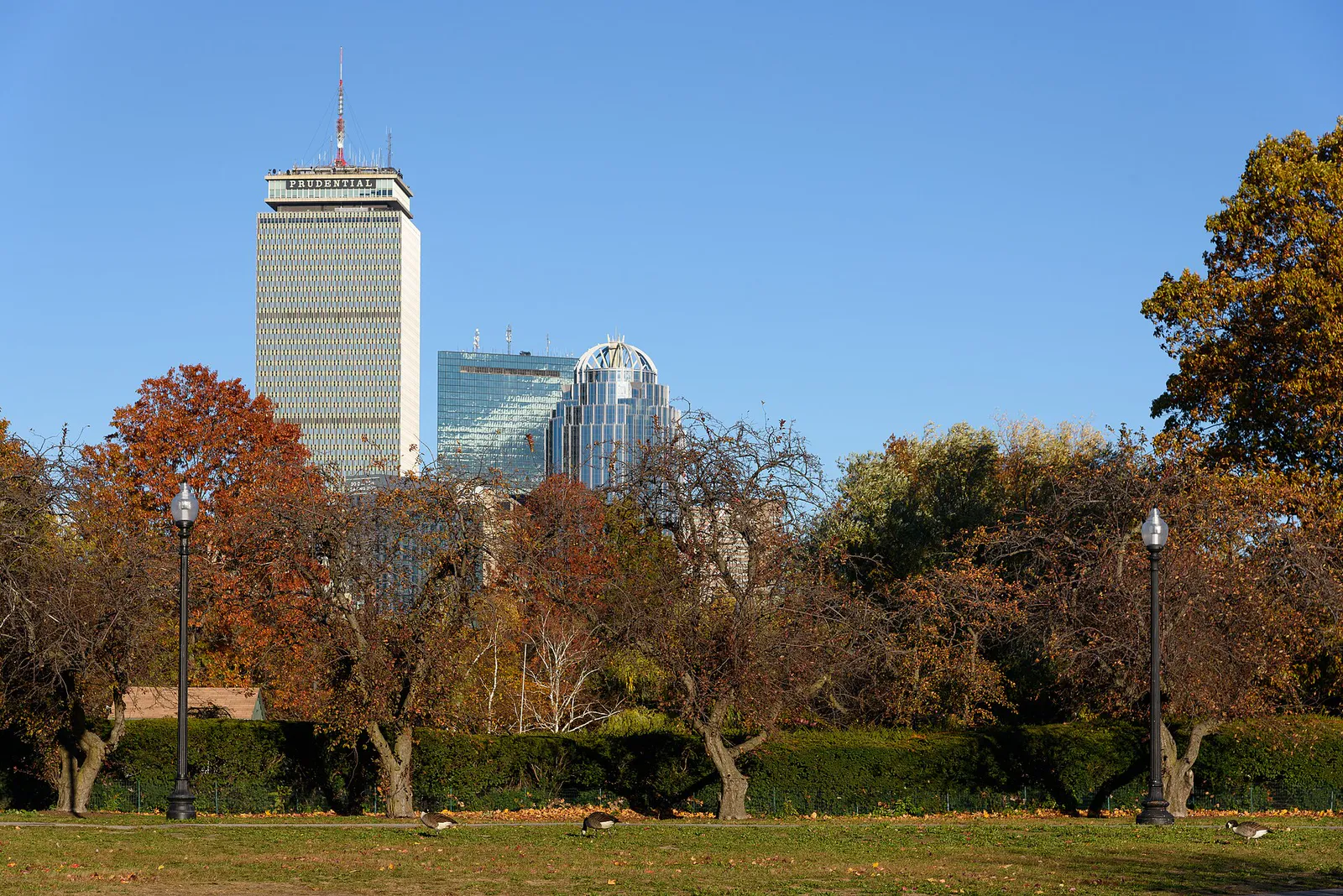
Best for: polished dates, architecture, shopping, indoor-outdoor combinations, and first-time visitors
Back Bay works well when the group wants an easy-to-understand Boston outing with Newbury Street, Boylston Street, Commonwealth Avenue, the Boston Public Library, restaurants, shops, and nearby access to the Esplanade. It is convenient, recognizable, and easy to combine with another central neighborhood.
Best for: historic atmosphere, short walks, visitors, photography, and classic Boston scenery
Beacon Hill and Downtown suit a history-focused or atmosphere-focused outing. Brick streets, Charles Street, Boston Common, the State House area, and access to the Freedom Trail make this a strong choice when the walk itself should feel like the activity.
Best for: food-centered outings, visitors, harbor walks, and plans built around one memorable meal
The North End and nearby waterfront are useful when food is the anchor and walking is the secondary activity. The area can support a meal, historic sites, harbor views, and a compact evening, but peak dining times and visitor crowds make spontaneity harder without a backup.
Best for: sports, concerts, museums, college energy, and active nights out
Fenway-Kenmore is a practical choice when the outing revolves around a game, show, museum, or energetic evening. Event schedules matter heavily here, so the same streets can feel relaxed at one hour and intensely crowded at another.
Best for: restaurant-focused dates, neighborhood wandering, small groups, and a less tourist-centered evening
The South End fits people who want dining, brownstone streets, local businesses, and a neighborhood-scale night rather than a landmark checklist. It works especially well when conversation and atmosphere matter more than packing several attractions into one outing.
Best for: parks, casual neighborhood days, families, dogs, and mixed indoor-outdoor plans
Jamaica Plain offers a different pace from central Boston, with Centre Street businesses and access to Jamaica Pond, the Arnold Arboretum, Franklin Park, and other parts of the Emerald Necklace. It is a strong choice when the group wants local character, green space, and room to adjust the plan.
Best for: waterfront views, casual food outings, skyline scenery, and a change from the central visitor circuit
East Boston can deliver a waterfront-centered outing with city views, neighborhood restaurants, and Blue Line access. It is useful when the group wants a Boston experience that feels connected to the harbor without repeating the most obvious downtown route.

Boston local guide
A generic list of the best things to do in Boston creates the wrong problem. It combines historic sites, restaurants, parks, museums, sports, nightlife, markets, and waterfront activities that serve completely different moods. A better decision starts by choosing the kind of outing, then the neighborhood that can deliver it with the least friction.
That approach is especially useful in Boston because many central areas appear close on a map while still requiring meaningful walking, transfers, or crowd navigation. One geographically compact plan usually feels fuller than several famous stops connected by constant movement.
The stopping rule is simple: once a neighborhood, anchor activity, and nearby backup all fit the group's time, budget, mobility, and weather constraints, the plan is complete. More comparison may produce more information, but not necessarily a better evening.
Explore your options
The same person may need a completely different Boston recommendation on a high-energy Saturday than after work on a cold Tuesday.
Choose one indoor anchor near food and transit. A museum, library, performance, café cluster, or restaurant-centered neighborhood keeps the outing real without demanding a heroic amount of movement.
Pair a neighborhood walk with one meal, museum, market, or public-space anchor. This creates variety while keeping the route flexible enough to shorten when the weather or group mood changes.
Use a longer historic, waterfront, park, or cross-neighborhood route, but preserve a clear geographic direction. High energy supports more distance, not random zigzagging between unrelated attractions.
Practical local guidance
Most bad local plans are not caused by a lack of options. They are caused by mismatched geography, timing, expectations, or energy.
A simpler way to decide
Use this sequence when everyone wants to go somewhere but nobody wants to spend another hour researching.
Include the trip to and from the destination. A two-hour outing and a half-day Boston plan should not be evaluated against the same list of possibilities.
Decide whether the group mainly wants food, conversation, movement, history, culture, entertainment, novelty, or recovery from a long day.
Select the district that best matches the need and transportation reality. This removes most irrelevant options before individual venues enter the discussion.
Choose the meal, attraction, event, park, performance, or route that gives the outing a clear beginning and a reason to leave the house.
Identify a nearby alternative in case of weather, a long wait, a sold-out event, or a sudden drop in group energy. Do not build an entirely separate itinerary.
When the plan fits the time, budget, neighborhood, and group, treat the decision as finished. The point is to experience Boston, not complete the internet.
Common local questions
These are common situations people face when trying to decide where to eat, what to do, where to get drinks, or how to spend their time in Boston.
Boston planning questions
Practical answers for people deciding where to eat, what to do, where to go, or how to make plans in Boston.
Choose the kind of experience first, then one neighborhood, then one anchor activity. Boston becomes easier when you stop comparing the entire city and build a compact plan around the time, weather, budget, and energy you actually have.
Good last-minute options include neighborhood walks, public spaces, museums with available entry, markets, casual restaurants, waterfront routes, bookstores, cafés, and events with same-day availability. Keep the plan centered in one district so a full venue does not collapse the evening.
Back Bay and Beacon Hill suit polished or scenic dates, the South End works well for restaurant-centered evenings, Jamaica Plain supports casual park-and-food combinations, Fenway-Kenmore fits activity-driven dates, and the North End or waterfront work when food and walking are the main event.
Many Boston outings can be built around walking and public transit. Choose destinations near the same line or within one walkable district, check current MBTA service information, and avoid adding distant stops simply because they appear close on a regional map.
Give visitors one recognizable Boston experience, one neighborhood meal, and time to explore without rushing. The Freedom Trail, Boston Common, Beacon Hill, Back Bay, Fenway, the waterfront, and neighborhood-focused outings can each anchor a visitor day.
Solo-friendly options include museums, libraries, bookstores, cafés, parks, historic walks, waterfront routes, markets, neighborhood photography, and performances. Choose something with a clear starting point so the outing does not depend on coordinating with anyone else.
Choose an indoor anchor and a district with several nearby fallbacks. Museums, libraries, markets, restaurants, performances, and compact shopping areas work better than a route that requires repeated outdoor travel between distant stops.
Adventria uses practical preferences such as budget, distance, company, mood, and desired experience to narrow local choices. It creates a focused shortlist and can make the final selection when continued comparison is no longer helping.
Source transparency
Official and locally relevant sources used to verify the practical information presented in this Boston decision guide.
City of Boston
City of Boston
Freedom Trail Foundation
Meet Boston
Boston decision engine
Tell Adventria what kind of experience you want, set your practical limits, and turn the options in Boston into one workable plan.
Choose a Boston Plan