San Agustín Historic District
Best for
Spanish colonial history, historic architecture, museum walking tours, and upscale historic dining.
 AdventriaLocalOpen App
South Texas Local Planning Guide
Trying to decide what to do in Laredo? Adventria helps you cut through the options and choose a good-enough plan without endless scrolling. From Spanish colonial plazas in the San Agustín Historic District to modern suburban dining along Del Mar Boulevard and outdoor recreation at Lake Casa Blanca, Laredo offers a rich borderland setting. This decision guide gives residents and visitors structured advice to coordinate outings around summer temperatures, trade corridor traffic, and seasonal community events.
The local decision problem
How to plan activities, dining, and outings in Laredo while navigating extreme summer heat, freight logistics corridors, and border bridge traffic patterns.
That is where Adventria comes in. Adventria helps narrow the options in Laredo around practical factors like location, distance, budget, vibe, who you are with, and the kind of experience you actually want, so research can turn into a decision.
Let Adventria narrow the optionsPick the right part of town
Different parts of Laredo work for different kinds of plans. Start with the experience you want, then narrow the map.
Best for
Spanish colonial history, historic architecture, museum walking tours, and upscale historic dining.
Best for
Architectural walking tours, quiet historic residential streets, and early-20th-century history.
Best for
Visual arts, local heritage offices, and historic civic buildings.
Best for
Higher education, environmental learning, and 19th-century military post architecture.
Best for
Artisan import shopping, classic loncherias, roadside architecture, and parade viewing.
Best for
Contemporary Mexican cuisine, modern bar-and-grills, carnes asadas, and suburban retail.
This is a quick starting point. The full guide covers 9 local neighborhoods and districts in Laredo.
Eat & drink
When the decision is less about what to do and more about where to eat or grab a drink, start here. These local cues narrow the food and drink decision without turning dinner or a night out into another hour of comparison.
For places to eat in Laredo, start with Del Mar & Plantation (North Laredo) or San Agustín Historic District depending on the kind of stop you want. Start with Del Mar & Plantation (North Laredo) for contemporary Mexican cuisine, modern bar-and-grills, carnes asadas, and suburban retail.. Spanning Del Mar Boulevard, McPherson Road, and San Dario Avenue, North Laredo is the suburban center for corporate retail centers, modern chef-driven restaurants, and neighborhood night spots. San Agustín Historic District works for spanish colonial history, historic architecture, museum walking tours, and upscale historic dining..
Plan a romantic dinner at The Tack Room—located inside the historic 1880s telephone exchange building at La Posada Hotel—followed by drinks and a night stroll across San Agustín Plaza. For a modern atmosphere, dine at Casazul Texas in North Laredo before attending a public stargazing dome show at TAMIU's Lamar Bruni Vergara Planetarium.
Still comparing options? Adventria can narrow the choice around budget, distance, vibe, and who you are with.
Decide with AdventriaPlan by situation
Start with the kind of plan you are actually trying to make. These city-specific ideas narrow the choice around who you are with, what you want to spend, the weather, and the kind of outing you want.
Take a self-guided architectural tour through the St. Peter's Historic District to examine late-19th and early-20th-century residential structures. Visit the Villa Antigua Border Heritage Museum on Zaragoza Street to study regional commerce and border history, or spend a quiet morning birdwatching along the Mesquite Bend and Osprey Hill trails at Lake Casa Blanca.
Bring kids to the Imaginarium of South Texas inside Mall Del Norte for hands-on, interactive science exhibits. When weather permits in the cooler morning hours, head to North Central Park on International Boulevard to use the splash pad, playgrounds, and paved walking loops, or explore live native fish and wildlife exhibits at the Lamar Bruni Vergara Environmental Science Center.
When afternoon solar heat exceeds 100°F or sudden convective rainstorms occur, move activities indoors. Tour the air-conditioned galleries at the Villa Antigua Border Heritage Museum, attend digital astronomy screenings at the Lamar Bruni Vergara Planetarium, browse local visual art inside the Laredo Center for the Arts, or visit the Imaginarium of South Texas.
Gather a group to reserve a shaded picnic pavilion at Lake Casa Blanca State Park for an outdoor afternoon barbecue, or play a round at the 18-hole disc golf course at North Central Park. For evening group entertainment, attend a touring show or athletic event at Sames Auto Arena or Uni-Trade Stadium, followed by a late-night gathering at a bar-and-grill on McPherson Road.
For an outdoor plan from Laredo, compare trails, state parks, national parks within trip range, and scenic drives. Options in the current city guide include Lake Casa Blanca State Park and Falcon State Park.
For a day trip from Laredo, compare Edinburg and McAllen. More options are listed in the trip section below.
Outdoors nearby
Use these nearby outdoor options when the plan calls for a trail, protected landscape, park, or drive instead of another indoor stop. Proximity here is geographic, not a promise about driving time.
Get out of town
When staying in town is not the answer, these nearby destinations give you a smaller starting set for a day trip, overnight escape, or weekend away.
Destination relationships are screened geographically. Straight-line proximity is not presented as road mileage or estimated travel time.
Local landmarks & attractions
These notable destinations offer a starting point when you want something specific to see, visit, or build into a day around Laredo. Distances are approximate from the city area.
historic district in Laredo, Webb County, Texas
arena in Laredo TX
baseball stadium in Laredo, Texas
historic district in Laredo, Webb County, Texas
Notable places are selected from structured public destination data and ranked for relevance, prominence, proximity, and variety.
Local decision signals
A useful local recommendation depends on how the city actually works. These conditions affect where to go, what to do, and whether a plan makes sense right now.
Between May and September, daily temperatures regularly range from 93°F to over 100°F. Midday solar heat index values between 10:30 AM and 7:00 PM make outdoor physical exertion hazardous, shifting recreation to early mornings or air-conditioned indoors.
Heavy commercial semi-trailer traffic servicing international trade bridges causes significant congestion on Mines Road (FM 1472), Loop 20, and the I-35 interchange during morning (8:00–10:00 AM) and afternoon (4:00–7:00 PM) industrial shift changes.
Passenger vehicles queuing for the Gateway to the Americas Bridge (Bridge 1) and Juarez-Lincoln Bridge (Bridge 2) frequently back up into Downtown street grids during weekends and cross-border shopping spikes.
Active Union Pacific and Kansas City Southern freight rail tracks bisect Downtown and Midtown, periodically halting vehicular movement on primary east-west arterial streets.
San Bernardo Avenue serves as the central artery for community parades during the annual Washington’s Birthday Celebration (WBCA) season in late January and February, triggering extensive vehicular detours.
El Metro Transit operates 23 fixed routes radiating out from the centralized Laredo Transit Center garage on Farragut Street, which provides structured public parking direct to Downtown plazas.
The linear Chacon Creek watershed features multi-use trails and bridges at U.S. Highway 83 and Meadow Avenue that double as seasonal roosting locations for Mexican free-tailed bats.
Neighborhood context
Neighborhoods are not interchangeable. Each area offers a different balance of atmosphere, transportation, food, nightlife, activities, and planning friction.
Best for: Spanish colonial history, historic architecture, museum walking tours, and upscale historic dining.
Established in 1755, this 23.9-acre district sits on the Rio Grande and features brick streets, San Agustín Plaza, the 1778 San Agustín Cathedral, and historic properties like Casa Ortiz and La Posada Hotel.
Best for: Architectural walking tours, quiet historic residential streets, and early-20th-century history.
Located north and west of Downtown, this residential neighborhood developed between 1881 and World War I surrounds St. Peter’s Catholic Church and features preserved historic home architecture.
Best for: Visual arts, local heritage offices, and historic civic buildings.
Developed in the 1880s around Laredo's historic City Hall building (El Mercado) at 500 San Agustín Avenue, this area hosts the Laredo Center for the Arts and Webb County Heritage Foundation offices.
Best for: Higher education, environmental learning, and 19th-century military post architecture.
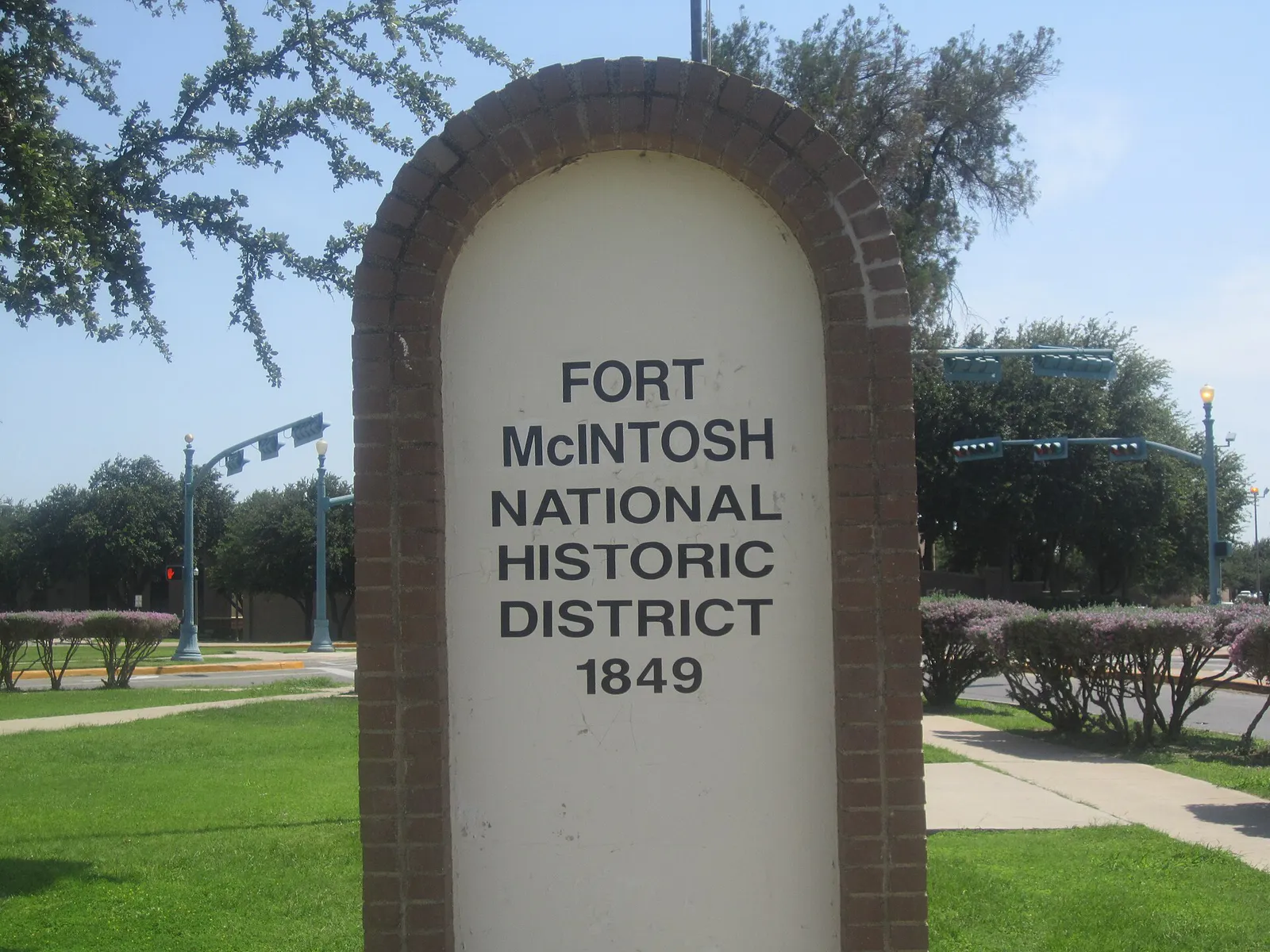
Situated on a 200-acre bend of the Rio Grande at the west end of Washington Street, this 1849 military post now functions as Laredo College's main campus, featuring preserved brick barracks and the Lamar Bruni Vergara Environmental Science Center.
Best for: Artisan import shopping, classic loncherias, roadside architecture, and parade viewing.
Running parallel to I-35 between Downtown and North Laredo, this roadside corridor is lined with traditional Mexican craft import stores, local eateries, and vintage roadside motel facades.
Best for: Contemporary Mexican cuisine, modern bar-and-grills, carnes asadas, and suburban retail.
Spanning Del Mar Boulevard, McPherson Road, and San Dario Avenue, North Laredo is the suburban center for corporate retail centers, modern chef-driven restaurants, and neighborhood night spots.
Best for: University facilities, planetarium shows, major arena events, outdoor reservoir recreation, and flight arrivals.
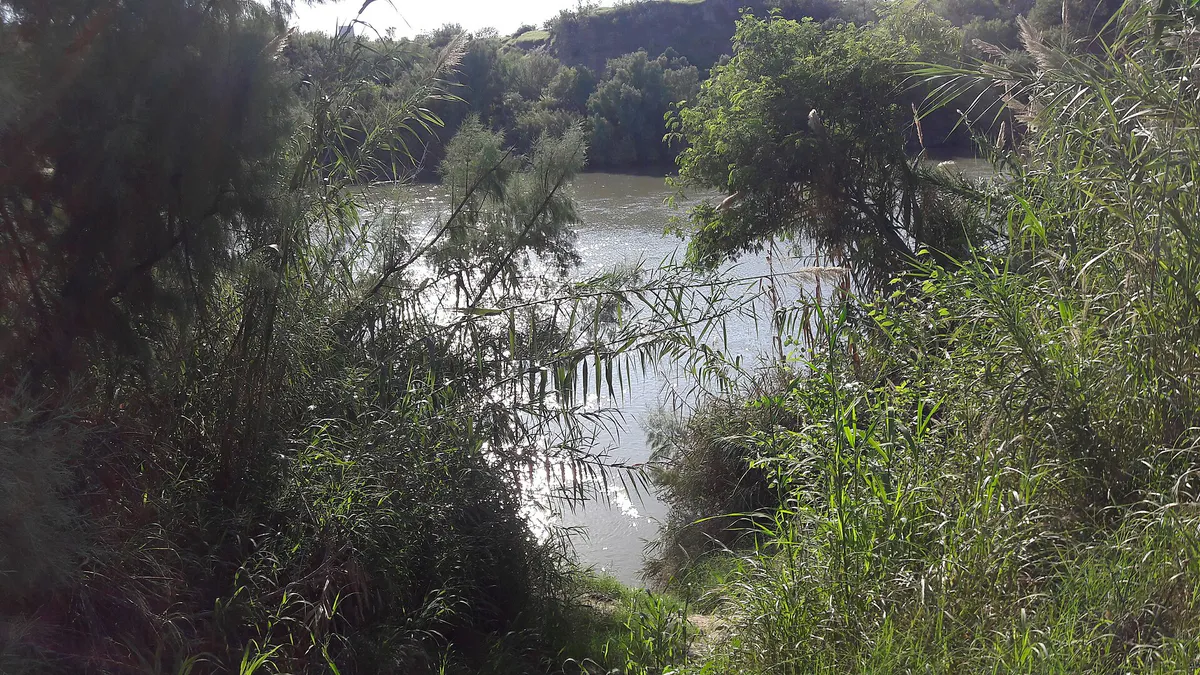
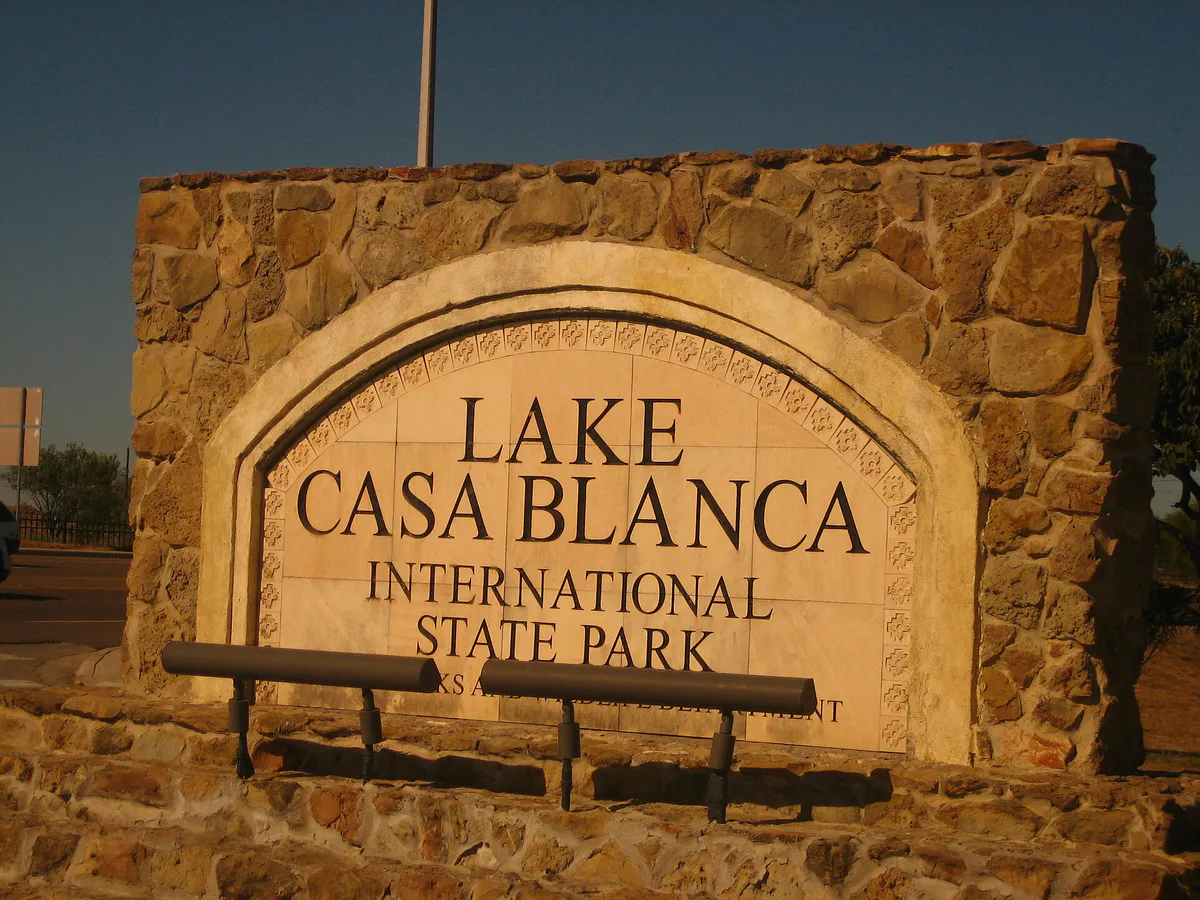
Encircling the city's eastern boundary along Bob Bullock Loop (US 59 / I-69W), this corridor connects Texas A&M International University, Sames Auto Arena, Uni-Trade Stadium, and Lake Casa Blanca International State Park.
Best for: Cross-border logistics facilities and commercial transport access.
Positioned along FM 1472 north of the I-35/Loop 20 interchange, this heavy industrial corridor services freight traffic moving toward the World Trade International Bridge and Colombia Solidarity Bridge.
Best for: Community parks, linear trail hiking, bat watching, and branch college campuses.
Extending south along U.S. Highway 83 and State Highway 359 toward Zapata Highway, South Laredo encompasses residential communities, Laredo College South Campus, Haynes Recreation Center, and the Chacon Creek trail network.
Laredo local guide
Laredo's urban layout reflects two distinct Eras: its 18th-century Spanish colonial origins centered along the Rio Grande and its modern 20th-century expansion northward and eastward along Interstate 35 and Loop 20. The historic core—encompassing the San Agustín, St. Peter's, Old Mercado, and Fort McIntosh districts—operates on a dense street grid. This area harbors the city's key cultural institutions, historic plazas, and international pedestrian bridge gateways. Because of its density, Downtown is highly walkable, though vehicular movement can be impacted by international border bridge queues and transiting freight trains.
Moving north along San Bernardo Avenue and Interstate 35, the urban design shifts into commercial strips, motor courts, and modern residential developments. North Laredo, centered around Del Mar Boulevard and McPherson Road, is car-dependent and acts as the primary district for contemporary dining, upscale shopping, and evening social spots. Meanwhile, the Loop 20 (Bob Bullock Loop) corridor circles the eastern perimeter, connecting major civic infrastructure including Texas A&M International University, Sames Auto Arena, Laredo International Airport, and Lake Casa Blanca International State Park.
To navigate Laredo efficiently, planners must account for trade-related logistics. As a primary North American inland port, heavy commercial truck traffic concentrates heavily along FM 1472 (Mines Road), Loop 20, and the I-35 interchange north of Downtown. Avoiding these freight arteries during morning and afternoon shift transitions saves time when moving between North Laredo and the historic downtown districts.
Explore your options
Match your outing plans to Laredo's specific spatial layout, climate conditions, and historic assets.
Concentrated around San Agustín Plaza, Zaragoza Street, and Washington Street, this framework works best for historic architecture lovers, solo visitors, and museumgoers.
Spanning the eastern perimeter, this highway corridor contains large-scale entertainment venues, higher education campuses, and state park recreation.
Focused along McPherson Road, Del Mar Boulevard, and San Dario Avenue, this area caters to couples, groups, and late-night dining.
Best utilized during early morning hours or late fall to early spring, these sites offer hiking, fishing, disc golf, and seasonal bat watching.
Practical local guidance
Keep these practical operational facts in mind when structuring your day across the city.
A simpler way to decide
Follow this step-by-step route to explore Laredo's colonial history and modern cultural institutions without getting stuck in traffic or solar heat.
Arrive early in Downtown Laredo and park in the covered Transit Center Garage on Farragut Street to keep your vehicle cool and secured.
Walk two blocks south to San Agustín Plaza. Tour the historic 1778 San Agustín Cathedral and walk Zaragoza Street while morning temperatures remain comfortable.
Step inside the Republic of the Rio Grande Museum at 1005 Zaragoza Street to view period-restored hacienda rooms, then head to the Villa Antigua Border Heritage Museum at 810 Zaragoza Street.
Dine at a historic downtown establishment such as El Mesón de San Agustín or head up San Bernardo Avenue for classic loncheria fare.
Drive east along Loop 20 to Texas A&M International University. Spend the hot afternoon browsing the Helen Richter Watson Art Gallery inside the Killam Library or attending an astronomy show at the Lamar Bruni Vergara Planetarium.
Head to Lake Casa Blanca State Park to catch sunset views over the reservoir, then finish your day with a carnes asadas dinner along McPherson Road.
Common local questions
These are common situations people face when trying to decide where to eat, what to do, where to get drinks, or how to spend their time in Laredo.
Laredo planning questions
Practical answers for people deciding where to eat, what to do, where to go, or how to make plans in Laredo.
El Metro Transit operates 23 fixed bus routes radiating from the central Laredo Transit Center at 1301 Farragut Street. Regular adult fares range from $1.75 to $2.00 in exact cash. Downtown Laredo and the San Agustín Historic District are easily walkable on foot once you arrive in the core.
The City of Laredo operates over 1,000 metered street spaces enforce Monday through Saturday. For covered and secured parking, use the 412-space Laredo Transit Center Garage at 1301 Farragut Street ($2.00 per hour). City surface lots are also located on Grant, Lincoln, and Iturbide Streets.
Late fall through early spring (November through March) offers the most comfortable weather for outdoor recreation, with daily high temperatures averaging between 68°F and 78°F. Summers bring extreme heat with daily highs regularly exceeding 100°F.
Yes. The Republic of the Rio Grande Museum offers free admission to all visitors on Tuesdays (regular admission is $3.00). Additionally, exploring San Agustín Plaza, viewing the exterior of historic structures, and walking the trails at North Central Park are completely free.
Avoid driving on Mines Road (FM 1472), Loop 20 near I-35, and the main I-35 northbound approaches during peak industrial shift change hours (8:00 AM–10:00 AM and 4:00 PM–7:00 PM). Use central north-south thoroughfares like McPherson Road or San Dario Avenue instead.
Laredo is known for borderland carnes asadas served family-style by the kilo (skirt steak/fajitas, sirloin, and costillas with grilled onions and charro beans), street tacos de trompo and piratas, slow-cooked barbacoa, cabrito, and regional 'Mexicue' barbecue.
The 1,650-acre state park features a 525-acre reservoir managed for fishing (largemouth bass, catfish, hybrid striped bass), boat ramps, a fishing pier, designated swimming areas, shaded campsites, picnic pavilions, and multi-use trails like the Roadrunner and Mesquite Bend loops.
Located on the Texas A&M International University campus off Loop 20, the planetarium features dual 4K digital projection under a dome theater. Public astronomy projection shows are scheduled on select evenings and weekends. Visitors should verify current showtimes on the TAMIU website.
El Centro de Laredo Farmers Market takes place on the third Saturday of every month from 11:00 AM to 3:00 PM at The Outlet Shoppes at Laredo (1600 Water Street), featuring over 25 local vendors selling fresh produce, honey, and hand-crafted regional items.
The Fort McIntosh Campus off Washington Street houses historic 19th-century military structures (including Arechiga Hall and Barkley-Cantu Chapel) and the Lamar Bruni Vergara Environmental Science Center, which showcases live native wildlife, fish, and ecological plant exhibits.
Source transparency
Official and locally relevant sources used to verify the practical information presented in this Laredo decision guide.
Laredo decision engine
Tell Adventria what kind of experience you want, set your practical limits, and turn the options in Laredo into one workable plan.
Choose a Laredo Plan