North Loop (Warehouse District)
Best for
Upscale dining, cocktail lounges, food halls, and boutique shopping.
 AdventriaLocalOpen App
Twin Cities Local Intelligence
Trying to decide what to do in Minneapolis? Adventria helps you cut through the options and choose a good-enough plan without endless scrolling. Whether you are looking for sub-zero bad weather plans, a reservation-free bite on Eat Street, or a effortless route across the Chain of Lakes, this guide strips away generic tourist filler to deliver practical neighborhood-level decisions for Minneapolis.
The local decision problem
How to efficiently choose dining, nightlife, cultural outings, and outdoor activities in Minneapolis based on seasonality, neighborhood dynamics, transit lines, and event disruptions.
That is where Adventria comes in. Adventria helps narrow the options in Minneapolis around practical factors like location, distance, budget, vibe, who you are with, and the kind of experience you actually want, so research can turn into a decision.
Let Adventria narrow the optionsPick the right part of town
Different parts of Minneapolis work for different kinds of plans. Start with the experience you want, then narrow the map.
Best for
Upscale dining, cocktail lounges, food halls, and boutique shopping.
Best for
Craft brewery hopping, neighborhood dive bars, and contemporary art galleries.
Best for
Diverse international dining, casual late-night eats, and fine art collections.
Best for
Riverfront history, world-class theater, scenic strolls, and stadium events.
Best for
East African global markets, live indie music, and bohemian student culture.
Best for
Lakeside recreation, outdoor bandstand concerts, and village retail shopping.
This is a quick starting point. The full guide covers 8 local neighborhoods and districts in Minneapolis.
Eat & drink
When the decision is less about what to do and more about where to eat or grab a drink, start here. These local cues narrow the food and drink decision without turning dinner or a night out into another hour of comparison.
For places to eat in Minneapolis, start with North Loop (Warehouse District) or Whittier / Eat Street depending on the kind of stop you want. Start with North Loop (Warehouse District) for upscale dining, cocktail lounges, food halls, and boutique shopping.. Historic 19th-century industrial zone turned modern hotspot featuring brick warehouses, loft conversions, award-winning chef restaurants, and proximity to Target Field. Whittier / Eat Street works for diverse international dining, casual late-night eats, and fine art collections.. Centered on a 17-block stretch of Nicollet Avenue, this multicultural district packs over 40 global eateries alongside the expansive Minneapolis Institute of Art.
Catch a show at the iconic First Avenue or 7th St Entry downtown, or catch theatrical productions in the Hennepin Theatre District. If you prefer taprooms and local watering holes, head to Northeast Minneapolis for craft breweries and neighborhood pubs.
Still comparing options? Adventria can narrow the choice around budget, distance, vibe, and who you are with.
Decide with AdventriaPlan by situation
Start with the kind of plan you are actually trying to make. These city-specific ideas narrow the choice around who you are with, what you want to spend, the weather, and the kind of outing you want.
Plan an evening walking the outdoor Minneapolis Sculpture Garden to view the iconic Spoonbridge and Cherry. Follow it up with small plates and craft cocktails at Parlour or Borough in the North Loop, or secure seats overlooking the river on the Guthrie Theater's cantilevered Endless Bridge.
Head to Minnehaha Regional Park to let kids explore the 53-foot waterfall and limestone bluffs. Alternatively, visit the Mill City Museum for interactive flour tower rides or take flat, stroller-friendly paths around Lake Harriet.
On weekdays, navigate downtown completely indoors using the 9.5-mile Skyway System. On weekends, pivot to massive indoor cultural anchors like the Minneapolis Institute of Art, the Weisman Art Museum, or the greenhouse spaces at local indoor conservatories.
Explore the Minneapolis Institute of Art (Mia) or walk through the 11-acre Minneapolis Sculpture Garden—both offer free admission daily. During summer, catch free outdoor live music and movie screenings at the Lake Harriet Bandshell.
Bring a book or bicycle down the Midtown Greenway, a grade-separated traffic-free trail running across South Minneapolis. Pair your ride with coffee in Northeast or uninterrupted browsing through the galleries at Mia or the Walker Art Center.
Choose multi-vendor food halls like Graze in the North Loop or taproom patios in Northeast Minneapolis. These venues offer flexible open seating, diverse culinary choices, and space to accommodate larger parties without split-check hassles.
For an outdoor plan from Minneapolis, compare trails, state parks, national parks within trip range, and scenic drives. Options in the current city guide include Fort Snelling State Park and State Capitol Ground.
Outdoors nearby
Use these nearby outdoor options when the plan calls for a trail, protected landscape, park, or drive instead of another indoor stop. Proximity here is geographic, not a promise about driving time.
Get out of town
When staying in town is not the answer, these nearby destinations give you a smaller starting set for a day trip, overnight escape, or weekend away.
Destination relationships are screened geographically. Straight-line proximity is not presented as road mileage or estimated travel time.
Local landmarks & attractions
These notable destinations offer a starting point when you want something specific to see, visit, or build into a day around Minneapolis. Distances are approximate from the city area.
contemporary art center in Minneapolis, Minnesota, United States
multi-purpose arena in St. Paul, MN, USA
zoo in Apple Valley, Minnesota, United States
art museum in Minneapolis, Minnesota
center for theater performance, production, education, and professional training in Minneapolis, Minnesota
amusement park inside Mall of America
baseball stadium in Minneapolis, Minnesota, USA
zoo and conservatory in Saint Paul, Minnesota, United States
Notable places are selected from structured public destination data and ranked for relevance, prominence, proximity, and variety.
Local decision signals
A useful local recommendation depends on how the city actually works. These conditions affect where to go, what to do, and whether a plan makes sense right now.
A severe geometric bottleneck on I-94/I-394 immediately south of downtown where traffic curves tightly under Hennepin and Lyndale Avenues, creating heavy rush-hour backup.
The world's largest continuous skyway system spans over 9.5 miles across 80 downtown blocks, but because it caters to weekday workforce foot traffic, corridors have restricted access or close completely on weekends.
Declarations after snowfalls over 2 inches enforce a strict 3-day parking rotation across designated routes, parkways, and even/odd street sides, with non-compliance leading directly to the impound lot.
Major events at U.S. Bank Stadium, Target Field, and Target Center create localized gridlock and surge pricing across surrounding parking ramps while heavily crowding METRO Blue and Green LRT lines.
City life pivots dramatically between sub-zero winters centered on indoor skyways, museum complexes, and Theodore Wirth winter sports to humid summers dominated by the Grand Rounds lakes and patio dining.
Designated Cultural Districts—such as West Broadway, East Lake Street, Cedar Avenue, and 38th Street—preserve immigrant and BIPOC commercial heritage through hyper-local grocers, markets, and arts spaces.
Downtown street grids run diagonally along the bend of the Mississippi River, whereas streets outside the core convert to cardinal N/S/E/W grids divided by Hennepin Avenue.
Neighborhood context
Neighborhoods are not interchangeable. Each area offers a different balance of atmosphere, transportation, food, nightlife, activities, and planning friction.
Best for: Upscale dining, cocktail lounges, food halls, and boutique shopping.
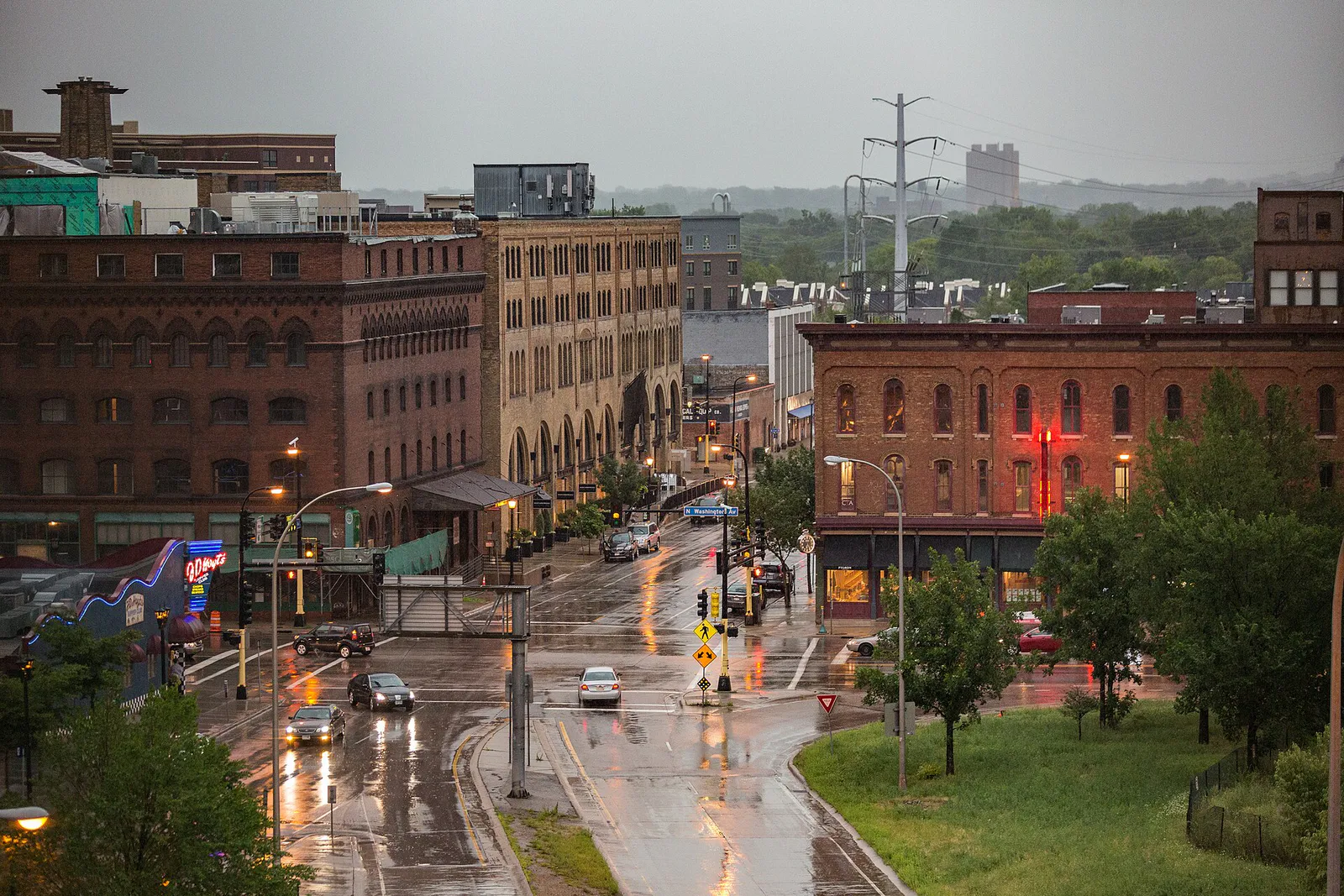
Historic 19th-century industrial zone turned modern hotspot featuring brick warehouses, loft conversions, award-winning chef restaurants, and proximity to Target Field.
Best for: Craft brewery hopping, neighborhood dive bars, and contemporary art galleries.
A historic working-class area across the Mississippi River transformed into a vibrant arts district full of taprooms, art studios, and Polish-Eastern European culinary heritage.
Best for: Diverse international dining, casual late-night eats, and fine art collections.
Centered on a 17-block stretch of Nicollet Avenue, this multicultural district packs over 40 global eateries alongside the expansive Minneapolis Institute of Art.
Best for: Riverfront history, world-class theater, scenic strolls, and stadium events.
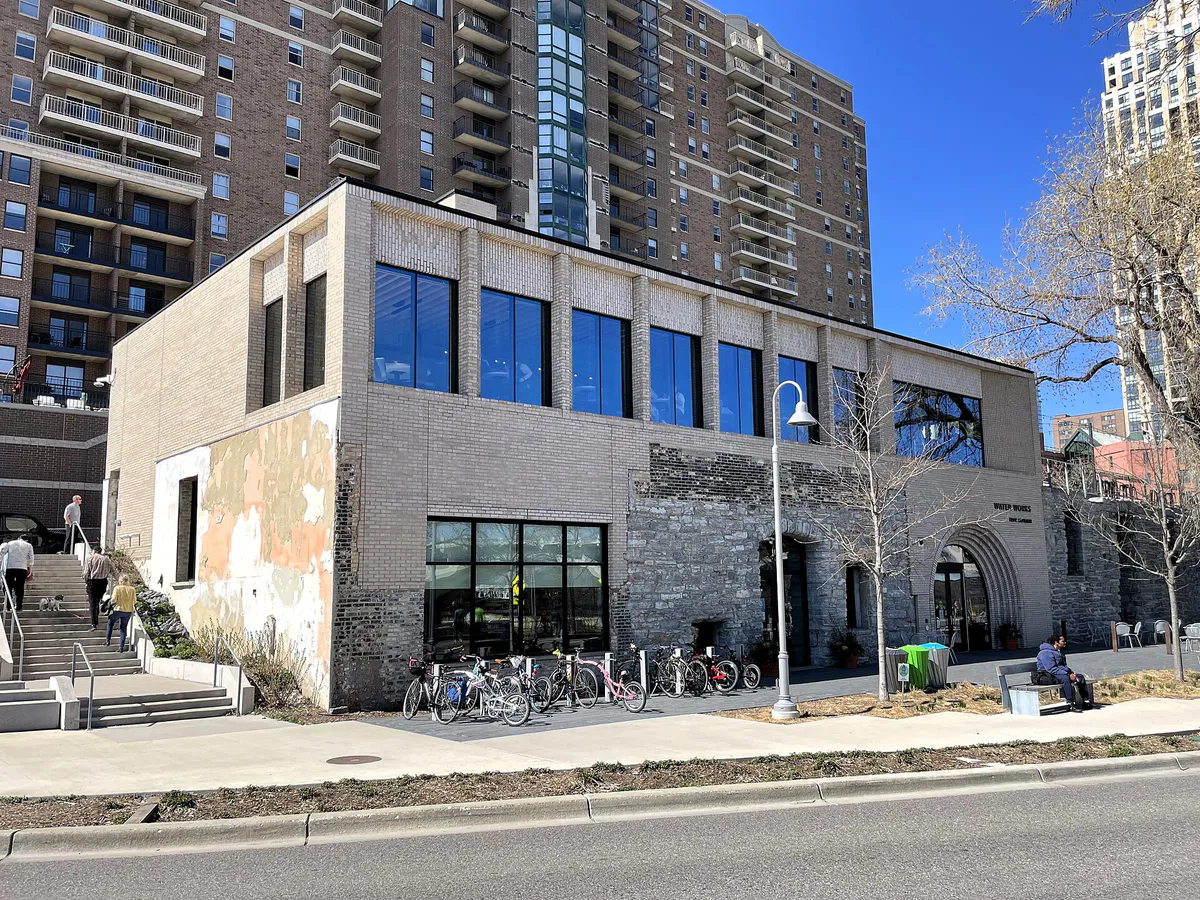
Former flour milling epicenter on the Mississippi River, redeveloped with lush green spaces, the Guthrie Theater, Mill City Museum, and views across the Stone Arch Bridge.
Best for: East African global markets, live indie music, and bohemian student culture.
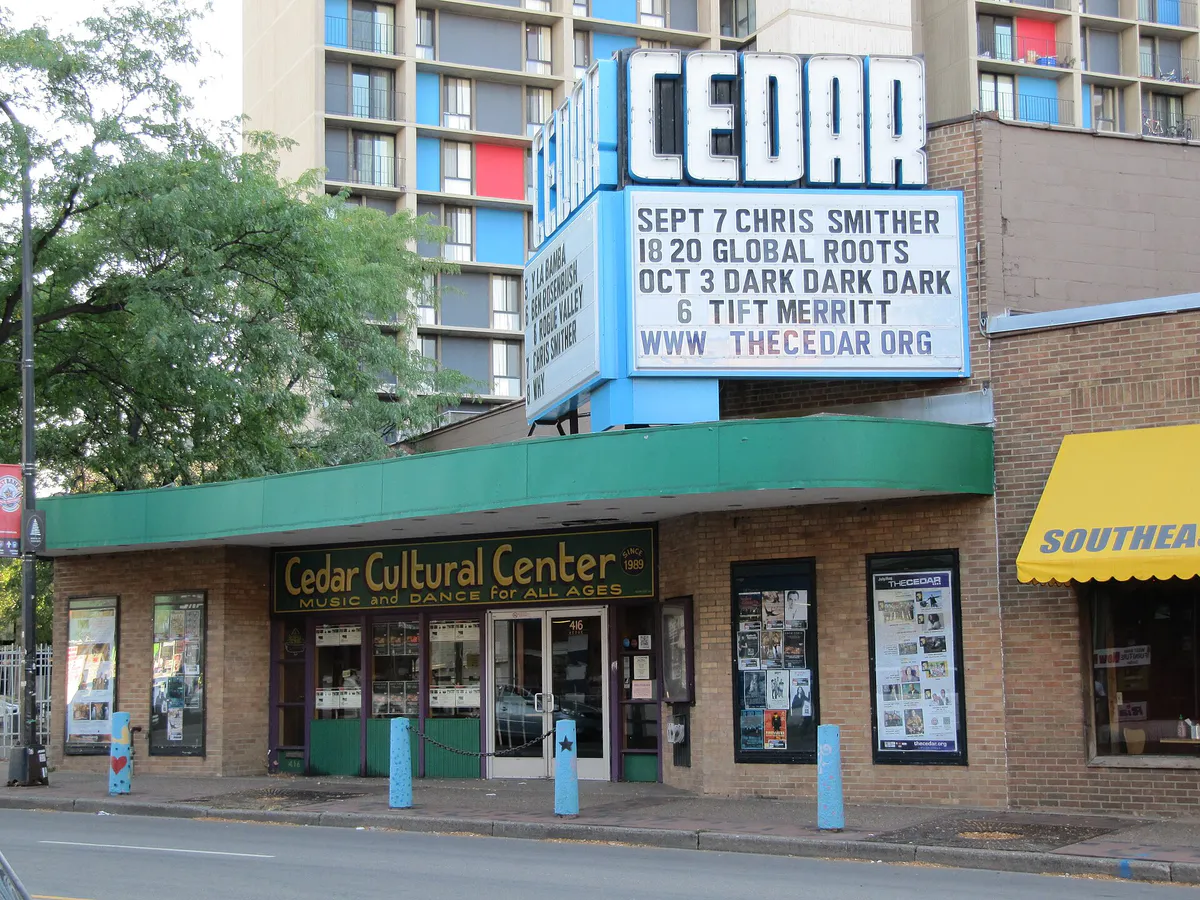
A historic entryway for international communities, hosting North America's largest Somali neighborhood alongside legendary live music joints and proximity to the U of M campus.
Best for: Lakeside recreation, outdoor bandstand concerts, and village retail shopping.
Classic residential enclave in Southwest Minneapolis framing Bde Maka Ska and Lake Harriet, complete with kayak rentals, paved trails, and local eateries.
Best for: Middle Eastern markets, Latin American bakeries, and authentic global food shopping.
A bustling multi-ethnic commercial artery running through Nordeast, offering regional grocers, taco stands, Middle Eastern bakeries, and casual family dining.
Best for: Latin American cuisine, handcrafted Mexican goods, and Somali retail centers.
A vibrant East-West corridor anchored by Mercado Central and Karmel Mall, brimming with small businesses, taquerias, and cultural enterprise.
Minneapolis local guide
Minneapolis is a city defined by water, industrial history, and extreme seasonal shifts. Divided into 11 distinct communities and 83 residential neighborhoods, navigating the city requires recognizing how street grids adapt to geography. Downtown streets align diagonally with the curve of the Mississippi River, whereas outer districts shift abruptly to strict cardinal directions. Hennepin Avenue serves as the primary dividing line, establishing quadrant directional suffixes across the city.
Seasonal planning governs local movement. During the humid summer months, activity centers on the Grand Rounds National Scenic Byway, the Chain of Lakes, and patio taprooms across Northeast. Conversely, sub-zero winters shift foot traffic indoors to Theodore Wirth Park for winter sports, or into the multi-block Downtown Skyway System on weekdays. Knowing when to pivot indoors or switch transport modes is essential for seamless navigation.
Explore your options
Match your dining and social preferences with the district that fits your speed.
The city's epicenter for high-end dining, cocktail lounges, and modern industrial aesthetic.
A 17-block stretch along Nicollet Avenue offering dense, casual international options.
A historic neighborhood combining creative studio spaces, craft taprooms, and dive bars.
A historic, bohemian neighborhood home to vibrant East African commerce and indie venues.
Practical local guidance
How to move around Minneapolis efficiently without getting caught in bottlenecks.
A simpler way to decide
Follow these steps to avoid common local friction points like stadium traffic or skyway weekend closures.
Determine if major events are scheduled at U.S. Bank Stadium, Target Field, or Target Center, which heavily impact parking availability and LRT crowding.
If visiting downtown during extreme cold or rain on a weekday, plan your route via the Skyway system. If it is a weekend, rely on street-level navigation as many skyways lock.
Use the METRO Light Rail for downtown-to-airport or cross-town university trips. Use rideshares, bicycles, or buses when venturing into Northeast or Eat Street.
If driving across town during peak hours, bypass the Lowry Hill Tunnel bottleneck on I-94/I-394 by utilizing surface arterials like Lyndale or Hennepin Avenues.
If parking on the street during winter, check local city declarations to ensure you are not parked on a Snow Emergency Route during active plow operations.
Leave room to explore nearby public green spaces, river view corridors, or neighborhood markets without needing strict advance ticket reservations.
Common local questions
These are common situations people face when trying to decide where to eat, what to do, where to get drinks, or how to spend their time in Minneapolis.
Minneapolis planning questions
Practical answers for people deciding where to eat, what to do, where to go, or how to make plans in Minneapolis.
Take the METRO Blue Line light rail directly from Terminal 1 or Terminal 2. It runs frequently and takes approximately 25 minutes to reach Downtown Minneapolis without dealing with highway traffic.
Skyway access is significantly restricted on weekends. Because the skyways are privately managed and cater primarily to downtown office workers, many corridors close or restrict access on Saturdays and Sundays. Plan for street-level walking on weekends.
Combine indoor culture with active winter recreation. Spend the morning cross-country skiing or tubing at Theodore Wirth Park's Trailhead, then warm up inside the free Minneapolis Institute of Art before dining along Eat Street.
The Minneapolis Institute of Art (Mia) offers free daily general admission. You can also walk through the Minneapolis Sculpture Garden, cross the historic Stone Arch Bridge area, or explore the Grand Rounds lake paths at zero cost.
A Snow Emergency triggers a 3-day parking rotation. Night 1 restricts parking on Snow Emergency Routes. Day 2 restricts even-numbered non-emergency street sides and parkways. Day 3 restricts odd-numbered non-emergency street sides. Pay close attention to signs to avoid towing.
Eat Street (Nicollet Ave) offers the densest cluster of diverse global dining. For high-end chef-driven concepts and trendy multi-vendor food halls, choose the North Loop. For craft beer and Eastern European comfort food, head to Northeast.
Yes, Minneapolis features extensive bike infrastructure, including the 5.5-mile Midtown Greenway and 51-mile Grand Rounds Byway. Shared mobility scooters and bikes are widely available across central neighborhoods during non-winter months.
Downtown parking ramp rates increase significantly and surrounding street meters switch to event pricing. METRO Light Rail trains become crowded immediately before and after games. If you are not attending the event, consider dining outside the downtown core in Nordeast or Whittier.
Source transparency
Official and locally relevant sources used to verify the practical information presented in this Minneapolis decision guide.
Minneapolis decision engine
Tell Adventria what kind of experience you want, set your practical limits, and turn the options in Minneapolis into one workable plan.
Choose a Minneapolis Plan