Downtown St. Petersburg (DTSP) & Waterfront Arts District
Best for
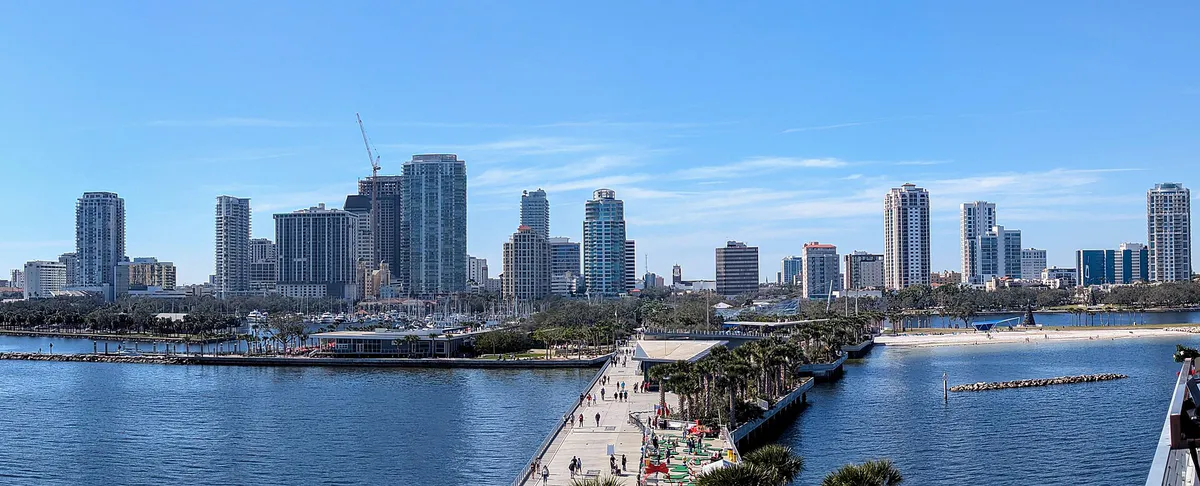
Waterfront parks, major art museums, high-rise dining, and pier walks
 AdventriaLocalOpen App
Local Decision Guide
Trying to decide what to do in Saint Petersburg? Adventria helps you cut through the options and choose a good-enough plan without endless scrolling. Saint Petersburg combines dense art corridors along Central Avenue with expansive waterfront parklands on Tampa Bay. Whether choosing between urban neighborhoods, navigating cross-bay bridges, or planning around summer afternoon thunderstorms, this guide provides structured, local insight for residents and visitors.

The local decision problem
How to navigate Saint Petersburg's neighborhoods, cultural corridors, transit networks, and weather patterns to make friction-free local decisions.
That is where Adventria comes in. Adventria helps narrow the options in Saint Petersburg around practical factors like location, distance, budget, vibe, who you are with, and the kind of experience you actually want, so research can turn into a decision.
Let Adventria narrow the optionsPick the right part of town
Different parts of Saint Petersburg work for different kinds of plans. Start with the experience you want, then narrow the map.
Best for
Waterfront parks, major art museums, high-rise dining, and pier walks
Best for
Mural tours, studio arts, independent shops, and live performances
Best for
Craft cocktail lounges, casual dining, boutique shopping, and vibrant nightlife
Best for
Craft brewery hopping, antique browsing, vintage cafes, and glass art
Best for
Large-scale art installations, glassblowing, immersive technology exhibits, and taprooms
Best for
Shaded historic walks, brick streets, residential architecture, and park access
This is a quick starting point. The full guide covers 8 local neighborhoods and districts in Saint Petersburg.
Eat & drink
When the decision is less about what to do and more about where to eat or grab a drink, start here. These local cues narrow the food and drink decision without turning dinner or a night out into another hour of comparison.
Head to the EDGE District or Grand Central District along Central Avenue for flexible walk-in options including local taco spots, casual brewpubs, and vintage cafes. On the waterfront, Doc Ford's Rum Bar & Grille and Fresco's Waterfront Bistro at the St. Pete Pier Approach accept walk-in guests, while craft brewery food trucks along Baum Avenue and 22nd Street South provide quick dining without lead times.
Catch an outdoor live concert at Jannus Live, a historic courtyard venue in the 200 block of Central Avenue. Afterward, walk through the EDGE and Central Arts districts to visit craft cocktail bars, taprooms, or rooftop venues like Pier Teaki at the end of the St. Pete Pier for night views across Tampa Bay.
Still comparing options? Adventria can narrow the choice around budget, distance, vibe, and who you are with.
Decide with AdventriaPlan by situation
Start with the kind of plan you are actually trying to make. These city-specific ideas narrow the choice around who you are with, what you want to spend, the weather, and the kind of outing you want.
Visit the St. Pete Pier to use the Glazer Playground and Majeed Splash Pad, or stop by the Tampa Bay Watch Discovery Center. For an afternoon outing, feed the koi fish and view flamingos at Sunken Gardens, or explore the interactive 15,000-square-foot FloridaRAMA exhibit at The Factory St. Pete.
Escape rain and summer heat by touring St. Pete's air-conditioned cultural institutions. Visit the Salvador Dalí Museum to view its geodesic glass bubble and surrealist collection, explore contemporary glass art at the Imagine Museum, or visit The James Museum of Western & Wildlife Art in central downtown.
Explore the St. Pete Pier and surrounding waterfront parklands (Straub Park and Vinoy Park) at no cost. Walk the elevated boardwalks at Weedon Island Preserve, or take a self-guided historical walk along the African American Heritage Trail in the Deuces Live District.
Bring a bike or rent a city transit option to ride the paved Fred Marquis Pinellas Trail westward from Downtown St. Pete. Spend time exploring the self-guided mural routes in the Central Arts and EDGE districts, stopping at local coffee roasters, or take advantage of discounted admission evenings at the Imagine Museum.
For an outdoor plan from Saint Petersburg, compare trails, state parks, national parks within trip range, and scenic drives. Options in the current city guide include Skyway Fishing Pier State Park and Cockroach Bay Preserve State Park.
Combine a late-afternoon gallery visit at the Museum of Fine Arts or Salvador Dalí Museum with a walk along Beach Drive NE. Secure a patio reservation along Beach Drive at establishments like Parkshore Grill, Cassis, or BellaBrava, followed by evening drinks along the marina basin.
Gather at large-capacity venues such as 3 Daughters Brewing in the Warehouse Arts District, which offers arcade games, board games, and draft options, or Green Bench Brewing Co. near the EDGE District for its open lawn beer garden. Alternatively, rent a pavilion at Fort De Soto Park for a coastal day trip.
Outdoors nearby
Use these nearby outdoor options when the plan calls for a trail, protected landscape, park, or drive instead of another indoor stop. Proximity here is geographic, not a promise about driving time.
Get out of town
When staying in town is not the answer, these nearby destinations give you a smaller starting set for a day trip, overnight escape, or weekend away.
Destination relationships are screened geographically. Straight-line proximity is not presented as road mileage or estimated travel time.
Local landmarks & attractions
These notable destinations offer a starting point when you want something specific to see, visit, or build into a day around Saint Petersburg. Distances are approximate from the city area.
art museum in St. Petersburg, Florida, United States
botanical park in St. Petersburg, Florida, United States
stadium in St. Petersburg, Florida
African-themed animal theme park in Tampa, Florida
non-profit organization in the USA
performing arts center and concert hall in St. Petersburg, Florida
indoor stadium in Tampa, Florida, USA
historic district in Florida, United States
Notable places are selected from structured public destination data and ranked for relevance, prominence, proximity, and variety.
Local decision signals
A useful local recommendation depends on how the city actually works. These conditions affect where to go, what to do, and whether a plan makes sense right now.
Downtown St. Pete sits on Tampa Bay on the east side of the peninsula, while Gulf barrier beaches lie 9 to 10 miles west. Transit across the peninsula via 1st Avenue North or South takes 35 to 45 minutes.
The Howard Frankland Bridge (I-275 N) experiences severe rush-hour congestion northbound in the morning and southbound in the evening. The seasonal Cross Bay Ferry offers a 50-minute catamaran alternative between the Port of St. Pete and downtown Tampa.
From June through September, colliding Gulf and Bay breezes produce intense afternoon thunderstorms, typically between 2:00 PM and 5:00 PM. Outdoor waterfront plans should shift indoors by early afternoon.
Low-lying neighborhoods such as Shore Acres and coastal access roads experience tidal and storm-surge flooding during extreme high tides and tropical storms, requiring detour routes.
The PSTA SunRunner operates along semi-dedicated lanes on 1st Avenue North and 1st Avenue South, providing rapid transit every 15 to 30 minutes between Downtown St. Pete and St. Pete Beach.
Metered street parking relies on the ParkMobile app. High weekend congestion at the St. Pete Pier triggers overflow direction toward the 1,295-space Sundial Garage at 117 2nd St N or the Al Lang lot.
Naturally occurring harmful algal blooms (*Karenia brevis*) sporadically impact Gulf beaches. Checking weekly FWC status reports helps determine whether to visit Gulf beaches or stick to Tampa Bay parks.
Neighborhood context
Neighborhoods are not interchangeable. Each area offers a different balance of atmosphere, transportation, food, nightlife, activities, and planning friction.
Best for: Waterfront parks, major art museums, high-rise dining, and pier walks
Anchors the city's urban core along Tampa Bay. Features Beach Drive outdoor cafes, marina basins, Straub Park, and the 26-acre St. Pete Pier.
Best for: Mural tours, studio arts, independent shops, and live performances
Spans the 300 to 700 blocks of Central Avenue. Home to Florida CraftArt, the Morean Arts Center, the Chihuly Collection, and high concentrations of outdoor mural art.
Best for: Craft cocktail lounges, casual dining, boutique shopping, and vibrant nightlife
Located between Dr. M.L.K. Jr. St. and 16th Street. Features restored early-20th-century brick architecture, walkable streetscapes, and popular local dining spots.
Best for: Craft brewery hopping, antique browsing, vintage cafes, and glass art
Extends along Central Avenue from 16th Street west to 31st Street. Known for its relaxed neighborhood feel, independent brewpubs, design studios, and the Imagine Museum.
Best for: Large-scale art installations, glassblowing, immersive technology exhibits, and taprooms
An industrial zone south and west of Grand Central transformed into creative studios, featuring The Factory St. Pete (FloridaRAMA) and 3 Daughters Brewing.
Best for: Shaded historic walks, brick streets, residential architecture, and park access
Bordered by 4th Street, 5th Avenue N, 30th Avenue N, and Tampa Bay. Defined by mature oak canopies, Craftsman and Mediterranean Revival homes, and proximity to North Shore Park.
Best for: Craftsman bungalow architecture, local art walks, and porch-centric neighborhood culture
Situated just west of downtown, north of Central Avenue. Famous for its high concentration of restored 1920s Craftsman bungalows and active community arts presence.
Best for: African American history, civil rights heritage, cultural venues, and local heritage trails
The historical commercial core of St. Pete's African American community. Features the historic Manhattan Casino, the Dr. Carter G. Woodson African American Museum of Florida, and heritage trail markers.
Saint Petersburg local guide
Understanding Saint Petersburg's layout requires recognizing its geography as the southern peninsula of Pinellas County. Downtown St. Pete anchors the eastern shore along Tampa Bay, while the coastal barrier beaches—including St. Pete Beach and Treasure Island—sit roughly 9 to 10 miles to the west. Drivers traveling between downtown and the Gulf coast should plan for 35 to 45 minutes of travel time along 1st Avenue North (westbound) or 1st Avenue South (eastbound).
Interstate commute corridors require careful timing. The Howard Frankland Bridge (I-275 N) links North St. Pete directly to Tampa International Airport and downtown Tampa, but experiences severe rush-hour back-ups. Travelers moving across Tampa Bay during peak morning or evening commute hours can bypass highway delays by utilizing the Cross Bay Ferry, which operates passenger catamaran service between the Port of St. Pete and the Tampa Convention Center.
Seasonal climate patterns significantly dictate daily schedules. From June through September, high heat and daily afternoon thunderstorms are common between 2:00 PM and 5:00 PM. Outdoor plans at coastal preserves like Weedon Island or open sites like the St. Pete Pier should be scheduled for morning hours, allowing a seamless transition to indoor museum galleries or covered dining by mid-afternoon.
Explore your options
Central Avenue serves as the primary east-west spine of Saint Petersburg, transitioning through distinct neighborhood characters as it runs from Tampa Bay westward.
Spanning the 300 to 1000 blocks of Central Avenue, this walkable stretch mixes mural art with restored brick storefronts.
Located between 16th and 31st Streets, offering a relaxed neighborhood vibe with strong craft beer roots.
An industrial creative district south and west of Grand Central housing large studio spaces and interactive art.
An upscale waterfront boulevard running along Straub Park and marina basins in Downtown St. Pete.
Practical local guidance
Saint Petersburg provides multiple transit options for navigating the urban core and reaching coastal destinations without relying solely on private vehicles.
A simpler way to decide
Follow these practical steps to navigate weather patterns, parking rules, and venue logistics across the city.
Review the daily forecast for afternoon thunderstorm windows and consult the weekly FWC Red Tide report if planning beach or outdoor waterfront activities.
If driving downtown, park at the central 1,295-space Sundial Garage (117 2nd St N) or download the ParkMobile app to pay for metered street spaces.
Visit open outdoor locations such as Weedon Island Preserve, Fort De Soto Park, or the St. Pete Pier between 8:00 AM and 1:30 PM.
Move indoors before potential afternoon heat or lightning by visiting nearby cultural stops like The Dalí Museum, Imagine Museum, or Museum of Fine Arts.
Board the SunRunner along 1st Avenue North or South to travel between the arts districts and western beach corridors without re-parking your vehicle.
Secure weekend dinner reservations 1 to 2 weeks early for Beach Drive, or opt for walk-in dining in the EDGE and Grand Central districts.
Common local questions
These are common situations people face when trying to decide where to eat, what to do, where to get drinks, or how to spend their time in Saint Petersburg.
Saint Petersburg planning questions
Practical answers for people deciding where to eat, what to do, where to go, or how to make plans in Saint Petersburg.
The PSTA SunRunner Bus Rapid Transit (BRT) connects Downtown St. Pete directly to St. Pete Beach using semi-dedicated transit lanes along 1st Avenue North and 1st Avenue South. Buses run every 15 minutes during the day and every 30 minutes in the evening.
While the St. Pete Pier offers on-site spaces in the Pelican and Dolphin lots, these frequently fill during weekend peak hours. The 1,295-space city-operated Sundial Garage at 117 2nd St N provides centralized parking within short walking distance of Beach Drive, Straub Park, and the Pier approach.
Downtown St. Pete features a dense concentration of indoor museums. You can pivot indoors to the Salvador Dalí Museum, the Museum of Fine Arts, The James Museum of Western & Wildlife Art, or head to Grand Central to tour the Imagine Museum.
The Cross Bay Ferry is a seasonal passenger catamaran that departs from the Port of St. Pete in the Innovation District and arrives at the Tampa Convention Center in downtown Tampa. The trip takes approximately 50 minutes and avoids I-275 highway congestion.
Yes. The Downtown Looper (eLooper) offers free transit service around DTSP museums, hotels, and waterfront parks. Additionally, the Central Avenue Trolley provides free rides along the Central Avenue corridor between the St. Pete Pier and Grand Central Station.
Street parking in downtown St. Petersburg is metered and managed via pay stations or the ParkMobile app. Time limits and enforcement hours vary by block, so check posted street signage before leaving your vehicle.
Colliding sea breezes cause near-daily rain and lightning between 2:00 PM and 5:00 PM from June through September. Outdoor activities at nature preserves, parks, or splash pads should be scheduled in the morning, shifting to museums, shopping, or covered dining by mid-afternoon.
The Imagine Museum in the Grand Central District offers special discounted admission hours on Tuesday evenings, Thursday evenings, and Sunday mornings. Visitors should verify current promotional hours and ticket policies on the museum's website.
Source transparency
Official and locally relevant sources used to verify the practical information presented in this Saint Petersburg decision guide.
Saint Petersburg decision engine
Tell Adventria what kind of experience you want, set your practical limits, and turn the options in Saint Petersburg into one workable plan.
Choose a Saint Petersburg Plan