Midtown
Best for
Arts, high-rise living, LGBTQ+ nightlife, direct MARTA access
 AdventriaLocalOpen App
Local Decision Engine
Trying to decide what to do in Atlanta? Adventria helps you cut through the options and choose a good-enough plan without endless scrolling. A factual decision framework for navigating Atlanta's distinct districts, transit systems, traffic bottlenecks, and microclimates. Build seamless itineraries, select the right neighborhood for your vibe, and bypass common local friction points.
The local decision problem
Navigating neighborhood friction, severe highway bottlenecks, and daily seasonal weather shifts to choose where to go, eat, and spend time in Atlanta.
That is where Adventria comes in. Adventria helps narrow the options in Atlanta around practical factors like location, distance, budget, vibe, who you are with, and the kind of experience you actually want, so research can turn into a decision.
Let Adventria narrow the optionsPick the right part of town
Different parts of Atlanta work for different kinds of plans. Start with the experience you want, then narrow the map.
Best for
Arts, high-rise living, LGBTQ+ nightlife, direct MARTA access
Best for
Luxury shopping, fine dining, corporate high-rises, upscale lounge night spots
Best for
Adaptive-reuse food halls, civil rights history, BeltLine access, nightlife
Best for
Victorian architecture, food hall grazing, street art, patio dining
Best for
Streetcar suburb charm, bungalow walking, casual pubs, independent shopping
Best for
Industrial design hubs, modern boutique retail, high-end culinary concepts
This is a quick starting point. The full guide covers 8 local neighborhoods and districts in Atlanta.
Eat & drink
When the decision is less about what to do and more about where to eat or grab a drink, start here. These local cues narrow the food and drink decision without turning dinner or a night out into another hour of comparison.
Head to food halls like Ponce City Market in Old Fourth Ward or Krog Street Market in Inman Park, where counter-service stalls serve chef-driven dishes on communal tables. Alternatively, drive up the Buford Highway corridor (Chamblee/Doraville) for dozens of walk-in Asian and Latin American spots.
For alternative live music and neighborhood bars, go to East Atlanta Village or Edgewood Avenue in Old Fourth Ward. For high-energy clubs and rooftop lounges, focus on Midtown. For sleek cocktail dens and valet fine dining, head to Buckhead Village or West Midtown.
Still comparing options? Adventria can narrow the choice around budget, distance, vibe, and who you are with.
Decide with AdventriaPlan by situation
Start with the kind of plan you are actually trying to make. These city-specific ideas narrow the choice around who you are with, what you want to spend, the weather, and the kind of outing you want.
Pair Friday Jazz at the High Museum of Art in Midtown with dinner along Peachtree Street. Alternatively, catch dusk skyline views from the BeltLine Eastside Trail before sitting down for chef-driven meals in Inman Park or along the Decatur Town Square.
Visit Zoo Atlanta in historic Grant Park to view African savanna habitats and giant pandas. Combine this with the interactive indoor exhibits at Fernbank Museum of Natural History, which includes a 65-acre old-growth forest canopy walk.
Park once in Downtown Atlanta to tour the Georgia Aquarium, World of Coca-Cola, and National Center for Civil and Human Rights entirely under roof. Another option is grazing through Ponce City Market's multi-level indoor market hall.
Visit the Martin Luther King Jr. National Historical Park in Sweet Auburn, which offers free admission to the visitor center, Freedom Hall, and Ebenezer Baptist Church. Follow with a self-guided mural walk along the BeltLine Eastside Trail and Krog Street Tunnel.
Walk or ride an e-bike along the BeltLine Eastside Trail, stopping to browse independent stalls at Krog Street Market or Ponce City Market. Spend an quiet afternoon at the High Museum of Art or working from coffee shops in Virginia-Highland and Decatur.
Book group space at the Lee + White adaptive-reuse complex in West End, featuring side-by-side craft breweries, distilleries, and food halls along the Westside BeltLine. For interactive entertainment, consider the rooftop games at Ponce City Market.
For an outdoor plan from Atlanta, compare trails, state parks, national parks within trip range, and scenic drives. Options in the current city guide include Sweetwater Creek State Park and Panola Mountain State Park.
Outdoors nearby
Use these nearby outdoor options when the plan calls for a trail, protected landscape, park, or drive instead of another indoor stop. Proximity here is geographic, not a promise about driving time.
Get out of town
When staying in town is not the answer, these nearby destinations give you a smaller starting set for a day trip, overnight escape, or weekend away.
Destination relationships are screened geographically. Straight-line proximity is not presented as road mileage or estimated travel time.
Local landmarks & attractions
These notable destinations offer a starting point when you want something specific to see, visit, or build into a day around Atlanta. Distances are approximate from the city area.
aquarium in Atlanta, Georgia, USA
art museum in Atlanta, Georgia, USA
stadium in Atlanta, Georgia, U.S.
state capitol building of the U.S. state of Georgia
amusement park located west of Atlanta, Georgia
zoo in Georgia, US
American museum of The Coca-Cola Company
movie theater in Atlanta, Georgia, United States
Notable places are selected from structured public destination data and ranked for relevance, prominence, proximity, and variety.
Local decision signals
A useful local recommendation depends on how the city actually works. These conditions affect where to go, what to do, and whether a plan makes sense right now.
Interstate 285 forms a 64-mile ring road separating dense, historic intown neighborhoods (Inside the Perimeter / ITP) from automobile-dependent outer suburbs (Outside the Perimeter / OTP).
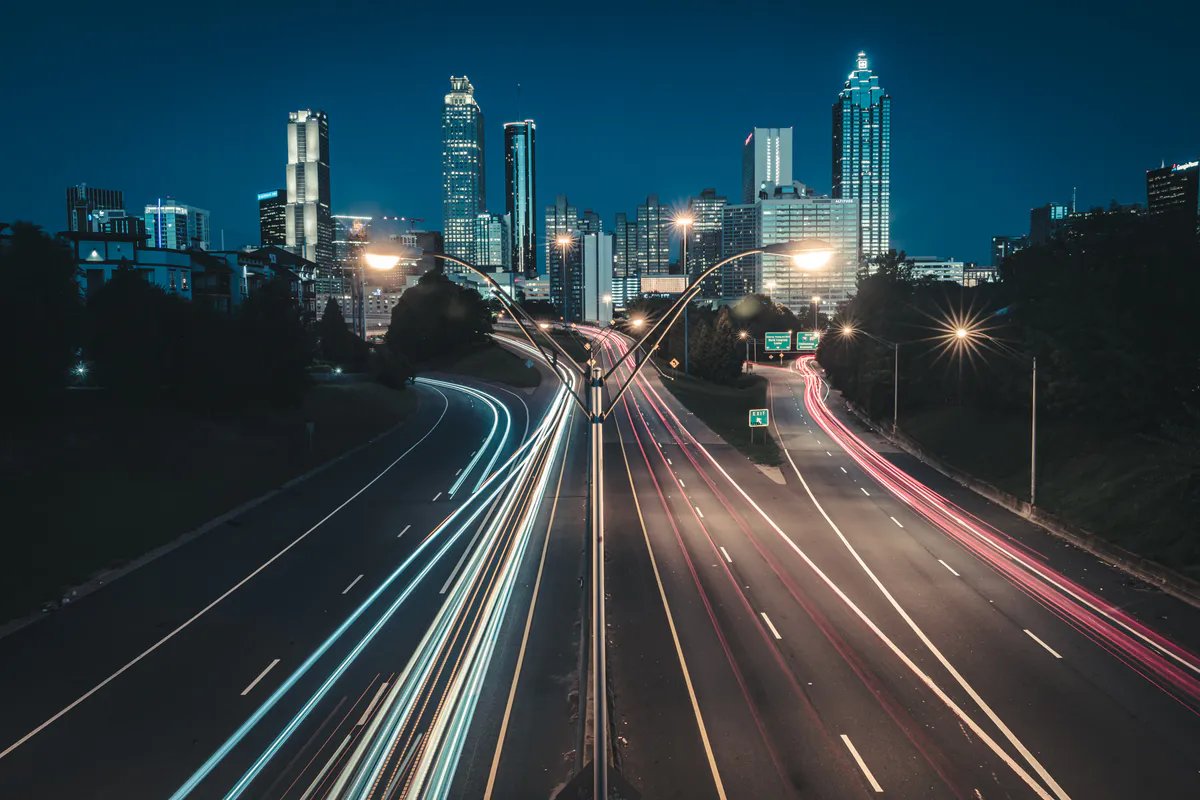
The I-75/I-85 central highway highway merge through Downtown and Midtown experiences gridlock daily from 7:00 AM–9:30 AM and 3:30 PM–7:00 PM.
High heat and humidity trigger routine, intense late-afternoon thunderstorms between 3:00 PM and 6:00 PM from June through August.
Atlanta's urban tree canopy produces dense pine and hardwood pollen in late March and April, coating outdoor surfaces in a visible yellow layer.
Due to rolling mountain foothills and historic rail spur lines, Atlanta lacks a continuous grid system; over 70 metro streets share the name Peachtree.
A converted 22-mile multi-use rail corridor functions as a grade-separated arterial for walking, biking, and accessing food halls without vehicular interaction.
Neighborhood context
Neighborhoods are not interchangeable. Each area offers a different balance of atmosphere, transportation, food, nightlife, activities, and planning friction.
Best for: Arts, high-rise living, LGBTQ+ nightlife, direct MARTA access
Atlanta's high-density cultural hub housing major arts institutions, corporate towers, and Piedmont Park. Highly walkable along Peachtree Street with direct rail transit to the airport.
Best for: Luxury shopping, fine dining, corporate high-rises, upscale lounge night spots
An affluent northern commercial center defined by high-end retail malls, valet-driven steak and sushi spots, and historic residential estates.
Best for: Adaptive-reuse food halls, civil rights history, BeltLine access, nightlife
Historic Eastside neighborhood containing Ponce City Market, Martin Luther King Jr. National Historical Park, and late-night nightlife along Edgewood Avenue.
Best for: Victorian architecture, food hall grazing, street art, patio dining
Picturesque late-19th-century neighborhoods linked by the BeltLine Eastside Trail and Krog Street Tunnel, featuring chef-driven dining and historic mill cottages.
Best for: Streetcar suburb charm, bungalow walking, casual pubs, independent shopping
Cozy early-20th-century residential neighborhood northeast of Midtown, centered around commercial nodes packed with local taverns and boutiques.
Best for: Industrial design hubs, modern boutique retail, high-end culinary concepts
A converted rail and warehouse district turned interior design center, home to top-tier chef restaurants, sleek cocktail dens, and live music halls.
Best for: Indie rock venues, dive bars, alternative art, laid-back neighborhood taverns
An unpretentious, pedestrian-friendly neighborhood crossroad in East Atlanta known for live underground music, local art, and casual late-night spots.
Best for: Walkable town square, craft beer venues, family dining, festivals
An independent municipality directly east of Atlanta's city line, organized around a pedestrian central square with high culinary concentration.

Atlanta local guide
Atlanta is structured not around a single central core, but around a constellation of distinct urban villages and suburban nodes bound together by transit lines and highway loops. The most important geographic rule for planning an itinerary is understanding the 'Inside the Perimeter' (ITP) vs. 'Outside the Perimeter' (OTP) distinction created by Interstate 285. Intown neighborhoods inside the loop feature high density, historic streetcar-suburb housing stock, walkable commercial nodes, and major arts institutions, whereas OTP areas offer sprawling suburban commercial development and master-planned parks.
Traffic friction heavily influences movement between these sectors. The Downtown Connector—where Interstates 75 and 85 merge into a 12-to-14-lane artery through Downtown and Midtown—is a primary point of gridlock during morning and evening rush hours. Moving east-west across intown neighborhoods requires navigating non-grid surface streets like Ponce de Leon Avenue or Boulevard, which can clog rapidly during peak travel windows. Utilizing MARTA rail for north-south travel between the airport, Downtown, Midtown, and Buckhead avoids highway bottlenecks entirely.
Explore your options
Match your day or evening plans to the geographic hub that best aligns with your group's preferred style, transit needs, and pacing.
Best for first-time visitors, families, and sports fans looking for high attraction density around Centennial Olympic Park.
Best for pedestrian-first dining, patio hopping, shopping, and scenic walking between Old Fourth Ward and Inman Park.
Best for fine art lovers, theatrical performances, leafy park walks, and high-energy nightlife.
Best for adventurous eaters looking for authentic, immigrant-owned global dining options spanning over 25 countries.
Practical local guidance
Follow these practical local rules to navigate transit, traffic, and seasonal climate shifts without wasting time.
A simpler way to decide
A step-by-step framework for structuring a frictionless day exploring Atlanta's Eastside neighborhoods.
Take the MARTA Red or Gold line to Midtown Station, or park in a central garage near Ponce City Market to eliminate mid-day driving.
Spend your morning outdoors exploring Piedmont Park or visiting the High Museum of Art before heat and outdoor traffic peak.
Walk down to Ponce City Market or Krog Street Market for counter-service dining options that require no advance reservations.
Rent an e-bike or walk along the paved Eastside Trail to take in local street art, public sculptures, and shaded neighborhood stops.
Settle in for a late-afternoon patio drink or chef-driven dinner in Inman Park or take the MARTA Blue Line out to Decatur Square.
Common local questions
These are common situations people face when trying to decide where to eat, what to do, where to get drinks, or how to spend their time in Atlanta.
Atlanta planning questions
Practical answers for people deciding where to eat, what to do, where to go, or how to make plans in Atlanta.
MARTA rail is highly practical for direct North-South trips connecting Hartsfield-Jackson Airport, Downtown, Midtown, Buckhead, and Decatur. However, for east-west cross-town trips across intown residential neighborhoods, you will need to supplement rail with walking, micro-mobility, or rideshares.
ITP stands for 'Inside the Perimeter' (I-285 ring road) and includes Atlanta's urban, historic, high-density neighborhoods. OTP stands for 'Outside the Perimeter' and refers to the expansive suburban metro area defined by master-planned developments and car-dependent infrastructure.
Fall (September through November) is ideal, featuring clear skies, low humidity, and pleasant temperatures in the 60s and 70s°F. October is historically the driest month of the year.
If your itinerary focuses entirely on intown districts (Downtown, Midtown, O4W, Inman Park, Decatur), you can rely on MARTA, BeltLine walking, and rideshares. If you plan to visit suburban hubs or OTP attractions like Truist Park, a car is recommended.
The most popular paved stretch, the Eastside Trail, runs roughly 3 miles from the edge of Piedmont Park in Midtown down through Old Fourth Ward and Inman Park to Reynoldstown.
The Buford Highway international corridor in Chamblee and Doraville features over 100 immigrant-owned establishments serving authentic Vietnamese, Korean, Chinese, Mexican, and Central American cuisines.
Local regulations mandate last call at 2:00 AM or 3:00 AM depending on specific municipal permits, with most bars winding down service by 2:30 AM.
Head to the Downtown museum block (Georgia Aquarium, World of Coca-Cola, Center for Civil and Human Rights), graze inside Ponce City Market, or visit the Fernbank Museum of Natural History.
Late March and April bring peak tree pollen season, during which Atlanta's dense tree canopy releases heavy concentrations of pine pollen, creating a visible yellow powder on cars and outdoor surfaces.
Buckhead Village District offers luxury pedestrian shopping, Ponce City Market features multi-level indoor and outdoor retail stalls, and Decatur Square provides independent boutiques on a walkable town plaza.
Source transparency
Official and locally relevant sources used to verify the practical information presented in this Atlanta decision guide.
Atlanta decision engine
Tell Adventria what kind of experience you want, set your practical limits, and turn the options in Atlanta into one workable plan.
Choose a Atlanta Plan