Old Towne Orange Historic District (The Circle / Plaza)
Best for
Walkable dining, antique shopping, architectural walks, and outdoor patio dining
 AdventriaLocalOpen App
Local Decision Guide
Trying to decide what to do in Orange? Adventria helps you cut through the options and choose a good-enough plan without endless scrolling. Navigating Orange successfully comes down to understanding its distinct geographical divisions—from the compact pedestrian grid of historic Old Towne to the sprawling foothill parks in East Orange. This guide provides practical insights on parking strategies, regional transit links, microclimates, and venue scheduling to help residents and visitors resolve common planning dilemmas.
The local decision problem
How to plan dining, cultural visits, and outdoor outings in Orange, California while managing Old Towne parking enforcement, university event calendars, microclimate temperature shifts, and regional transit.
That is where Adventria comes in. Adventria helps narrow the options in Orange around practical factors like location, distance, budget, vibe, who you are with, and the kind of experience you actually want, so research can turn into a decision.
Let Adventria narrow the optionsPick the right part of town
Different parts of Orange work for different kinds of plans. Start with the experience you want, then narrow the map.
Best for
Walkable dining, antique shopping, architectural walks, and outdoor patio dining
Best for
Arts performances, museum visits, academic facilities, and coffee shops
Best for
Hiking, trail running, scenic foothill views, and suburban living
Best for
Equestrian activities, semi-rural atmosphere, and private horse trails
Best for
Local Hispanic cultural heritage, neighborhood parks, and casual Mexican dining
Best for
Mid-century modern architectural viewing and historic residential tours
This is a quick starting point. The full guide covers 8 local neighborhoods and districts in Orange.
Eat & drink
Trying to decide where to eat in Orange? Start with the local dining context below and narrow the decision around the kind of meal or experience you actually want.
For immediate walk-in dining in Old Towne, target casual counter-service spots or high-capacity craft brewpubs like Bruxie (waffle sandwiches), The Filling Station Cafe (classic diner meals), or Finney's Crafthouse and 1886 Brewing Co. Fine-dining full-service restaurants like Gabbi's Mexican Kitchen often require advance reservations, so aiming for early seating at Haven Craft Kitchen or Felix Continental Cafe is recommended if dining spontaneously.
Still comparing options? Adventria can narrow the choice around budget, distance, vibe, and who you are with.
Decide with AdventriaPlan by situation
Start with the kind of plan you are actually trying to make. These city-specific ideas narrow the choice around who you are with, what you want to spend, the weather, and the kind of outing you want.
For an outdoor plan from Orange, compare trails, state parks, national parks within trip range, and scenic drives. Options in the current city guide include Chino Hills State Park and Huntington State Beach.
Reserve performance tickets at Musco Center for the Arts on the Chapman campus. Book early dinner nearby at Gabbi's Mexican Kitchen or Haven Craft Kitchen + Bar. After the performance, walk toward Glassell Street for craft beers or cocktails at 1886 Brewing Co. or local taverns before last call.
Drive to Irvine Regional Park ($3 per vehicle entry fee on weekdays, $5 on weekends). Pay $2.00 per person for entry to the Orange County Zoo inside the park to view southwestern native wildlife like black bears and mountain lions. Kids can explore the heritage oak trees and open playgrounds. Complete the trip with treats at Watson's Soda Fountain & Cafe in Old Towne or a stroll through free Pitcher Park.
Avoid foothill parks, as dirt trails automatically close during rain. Instead, visit the expanded Hilbert Museum of California Art (Wed–Sun 10:00 a.m.–5:00 p.m., free admission). Follow this with multi-level vintage shopping inside the fully covered Orange Circle Antique Mall and extended indoor coffee or lunch at Urth Caffe or Provisions Deli & Craft Beer.
Park at the Old Towne West Parking Structure (Lot 10) located at 130 N. Lemon Street. It provides free all-day parking one block from the train station and Hilbert Museum, eliminating the $1.25–$2.00 hourly meter rates and 2-hour limits on the Plaza Circle and surrounding side streets.
For a short escape from Orange, compare Lake Elsinore and Avalon. More options are listed in the trip section below.
Outdoors nearby
Use these nearby outdoor options when the plan calls for a trail, protected landscape, park, or drive instead of another indoor stop. Proximity here is geographic, not a promise about driving time.
Get out of town
When staying in town is not the answer, these nearby destinations give you a smaller starting set for a day trip, overnight escape, or weekend away.
Destination relationships are screened geographically. Straight-line proximity is not presented as road mileage or estimated travel time.
Local landmarks & attractions
These notable destinations offer a starting point when you want something specific to see, visit, or build into a day around Orange. Distances are approximate from the city area.
American theme park in California owned by The Walt Disney Company
library and art museum in San Marino, California
multi-purpose indoor arena in Anaheim, California, USA
library, museum, and campus in Yorba Linda, California, USA
concert hall in Los Angeles, California, U.S.
theme park in California, part of Disneyland Resort
entertainment complex in downtown Los Angeles
zoo in Santa Ana, California
Notable places are selected from structured public destination data and ranked for relevance, prominence, proximity, and variety.
Local decision signals
A useful local recommendation depends on how the city actually works. These conditions affect where to go, what to do, and whether a plan makes sense right now.
Metered street parking in Old Towne operates daily from 9:00 a.m. to 6:00 p.m. ($1.25–$2.00/hr). Drivers can bypass hourly limits and payment by using the free Old Towne West Parking Structure (Lot 10) at 130 N. Lemon Street or Municipal Lot 1 at 148 S. Grand Street.
Major university milestones—including Fall Move-In (August), Commencement (May), and large Musco Center performances—significantly increase traffic on Glassell Street and decrease available street parking and dining tables around the Plaza.
The Orange Transportation Center (100–194 N. Atchison St) sits directly in central Orange, served by the Orange County Line and Inland Empire-Orange County Line. It offers immediate access to the Hilbert Museum and Old Towne without driving on local freeways.
While low-lying central Orange frequently sees morning coastal marine layers clearing by late morning, eastern foothill areas like Orange Hills and Serrano Heights reach temperatures 5°F to 10°F warmer during summer afternoons.
OC Parks enforces mandatory closures on all unpaved dirt trails in Peters Canyon and Santiago Oaks regional parks during rain events, keeping trails closed for up to 3 days following rain to prevent damage.
Residential streets framing Chapman University and bordering Old Towne strictly require a City Area A Permit. Vehicles parked without visible permits face municipal citations.
Most kitchen operations in Old Towne close between 9:00 p.m. and 10:00 p.m., while historic taverns and local craft breweries hold last call between 1:00 a.m. and 2:00 a.m. on weekend nights.
Neighborhood context
Neighborhoods are not interchangeable. Each area offers a different balance of atmosphere, transportation, food, nightlife, activities, and planning friction.
Best for: Walkable dining, antique shopping, architectural walks, and outdoor patio dining
Centered on the circular Plaza at Glassell Street and Chapman Avenue, Old Towne features over 1,300 historic buildings from the 1880s through 1920s. It operates as an independent culinary and vintage retail core.
Best for: Arts performances, museum visits, academic facilities, and coffee shops
Bordering Old Towne to the east, this neighborhood is dominated by Chapman University's campus, hosting major cultural amenities like the Musco Center for the Arts and the Hilbert Museum of California Art.
Best for: Hiking, trail running, scenic foothill views, and suburban living
Set along the eastern edge rising into the Santa Ana Mountain foothills, this area contains foothill residential developments with quick access to regional wilderness parks.
Best for: Equestrian activities, semi-rural atmosphere, and private horse trails
An equestrian enclave in eastern Orange featuring large residential lots, dedicated bridle paths, horse facilities, and intentional omissions of sidewalks and streetlights.
Best for: Local Hispanic cultural heritage, neighborhood parks, and casual Mexican dining
A historic East Orange neighborhood centered around Chapman and El Modena avenues, originating as an independent agricultural colony and barrio with neighborhood parks and commercial corridors.
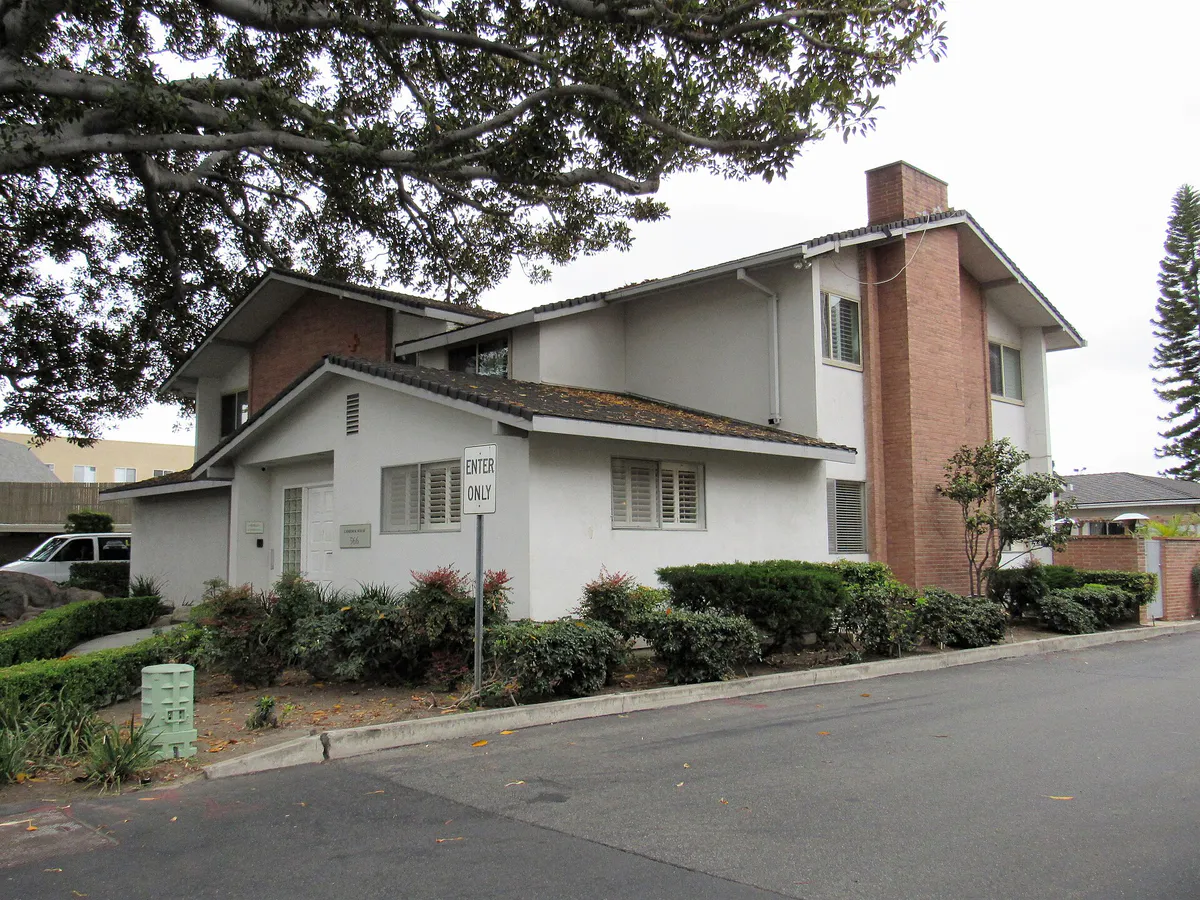
Best for: Mid-century modern architectural viewing and historic residential tours
Three central and eastern residential tracts developed by Joseph Eichler in the late 1950s and 1960s, designated as local historic districts for post-and-beam modern architecture.
Best for: Commercial shopping centers, light industrial hubs, and transit access
Located in northwestern Orange along Orange-Olive Road and Lincoln Avenue, this former citrus-packing hub has transitioned into commercial plazas, residential developments, and industrial nodes.
Best for: Pre-game dining, high-capacity restaurant seating, and sports entertainment
Positioned along the western city border near Katella Avenue and The City Drive, this commercial node caters to high-volume dining and entertainment traffic adjacent to Angel Stadium and Honda Center.
Orange local guide
Understanding Orange's roadway structure requires recognizing its dual identity: a compact, historic central core surrounded by expansive foothill neighborhoods and high-volume freeway corridors. Central Orange operates on a straightforward grid centered around the Plaza traffic circle at Glassell Street and Chapman Avenue. However, as travelers move east toward Orange Hills, Serrano Heights, and Orange Park Acres, the terrain transforms into winding arterial roads such as Santiago Canyon Road, Jamboree Road, and Cannon Street.
Regional travel is defined by several major highways. State Route 55 cuts north-south through the city, acting as a primary conduit between inland Orange County and John Wayne Airport/coastal communities. State Route 22 runs east-west along the southern boundary, while State Route 91 touches the northern border. On the western edge, the notorious 'Orange Crush' interchange—where Interstate 5, SR-22, and SR-57 meet near The City Drive S—experiences significant peak-hour commuter congestion.
For those looking to bypass freeway friction entirely, the Orange Transportation Center at 100–194 N. Atchison Street provides direct rail commuter access. Metrolink's Orange County Line and Inland Empire-Orange County Line deposit passengers two blocks west of the Plaza and directly across from the Hilbert Museum, making central Orange easily accessible without a car.
Explore your options
Match your group composition and goals to optimized destinations and logistical strategies across Orange.
Focus on train-adjacent cultural assets and independent retail inside central Orange.
Leverage wide-open outdoor spaces, low-cost native wildlife exhibits, and historic rides.
Combine architectural walks with fine regional dining and performing arts.
Explore extensive dirt trail networks in the eastern foothill regional wilderness areas.
Practical local guidance
Keep these precise operational boundaries in mind when planning activities in Orange.
A simpler way to decide
Follow this step-by-step sequence to avoid traffic bottlenecks, parking fees, and scheduling conflicts in central Orange.
Choose between taking Metrolink directly to Orange Transportation Center or driving via SR-55/SR-22. If driving, navigate directly to 130 N. Lemon Street rather than searching for Plaza street parking.
Pull into Lot 10 at 130 N. Lemon Street. Park for free without time limits, bypassing paid meters on Glassell Street and Chapman Avenue.
Walk one block to the Hilbert Museum of California Art (167 N. Atchison St) to view 20th-century California Scene paintings and animation art during morning gallery hours.
Walk two blocks east to the Plaza Circle. Spend midday browsing independent boutiques, vintage record shops, and antique centers along Glassell Street and Chapman Avenue.
Dine at local historic establishments like Felix Continental Cafe, Haven Craft Kitchen, or Watson's Soda Fountain & Cafe.
If staying into the evening for a show at Musco Center or drinks at local breweries, ensure evening food orders are placed before 9:00 p.m. when downtown kitchens begin closing.
Common local questions
These are common situations people face when trying to decide where to eat, what to do, where to get drinks, or how to spend their time in Orange.
Orange planning questions
Practical answers for people deciding where to eat, what to do, where to go, or how to make plans in Orange.
Free public parking is available at the Old Towne West Parking Structure (Lot 10) located at 130 N. Lemon Street, as well as Municipal Lot 1 at 148 S. Grand Street and the Orange Metrolink Station lot at 194 N. Atchison Street. These options allow you to avoid paid street meters ($1.25–$2.00/hr) and 2-hour limits around the Plaza.
The Hilbert Museum of California Art (167 N. Atchison St) is open Wednesday through Sunday from 10:00 a.m. to 5:00 p.m., and closed Mondays and Tuesdays. Admission is free, though advance online reservations are recommended. Free parking is available nearby at the Lemon Street parking structure.
Admission to the Orange County Zoo is $2.00 per person for ages 3 and up (children 2 and under are free). Note that the zoo is located inside Irvine Regional Park, which charges a vehicle entry fee of $3.00 on weekdays and $5.00 on weekends.
Major university events like Fall Move-In in August, Commencement in May, and high-profile performances at Musco Center bring thousands of extra visitors to central Orange. This increases street traffic along Glassell Street and fills up street parking and restaurant tables throughout Old Towne.
No. OC Parks enforces automatic closures on all unpaved dirt trails in Peters Canyon and Santiago Oaks regional parks during rain. Trails typically remain closed for up to 3 days following rain to prevent severe erosion and trail damage.
Yes. The Orange Transportation Center sits directly in the historic center. The Hilbert Museum is right across Atchison Street, and the Plaza Circle at Glassell and Chapman is just a two-block walk east along Chapman Avenue.
Residential streets framing Chapman University and bordering Old Towne strictly require a City Area A Permit. Vehicles parked on these streets without a permit are subject to municipal tickets.
Orange contains three mid-century modern Eichler developments designated as local historic districts: Fairhaven, Fairhills, and Fairmeadow. These residential neighborhoods are located in central and eastern Orange.
The Orange International Street Fair takes place every Labor Day weekend across the central Plaza and surrounding blocks, featuring international food booths, live music, and street vendors.
While local bars and brewpubs stay open until 1:00 a.m. or 2:00 a.m. on weekends, most dining room and kitchen operations in Old Towne close between 9:00 p.m. and 10:00 p.m.
Source transparency
Official and locally relevant sources used to verify the practical information presented in this Orange decision guide.
Orange decision engine
Tell Adventria what kind of experience you want, set your practical limits, and turn the options in Orange into one workable plan.
Choose a Orange Plan