Downtown / Central Business District
Best for
Boutique shopping, gallery hopping, wine tasting, and high-density dining
 AdventriaLocalOpen App
Local Carmel-by-the-Sea Strategy
Trying to decide what to do in Carmel-by-the-Sea? Adventria helps you cut through the options and choose a good-enough plan without endless scrolling. Carmel-by-the-Sea operates under distinct civic rules: addressless cross-street locations, unlit residential nights, automated parking enforcement, and dramatic microclimate divides. Use this guide to make smart decisions on dining, transit, beaches, and hidden village courtyards.
The local decision problem
Navigating Carmel-by-the-Sea's unique civic ordinances, addressless streets, automated parking enforcement, and microclimates to plan effective daily outings.
That is where Adventria comes in. Adventria helps narrow the options in Carmel-by-the-Sea around practical factors like location, distance, budget, vibe, who you are with, and the kind of experience you actually want, so research can turn into a decision.
Let Adventria narrow the optionsPick the right part of town
Different parts of Carmel-by-the-Sea work for different kinds of plans. Start with the experience you want, then narrow the map.
Best for
Boutique shopping, gallery hopping, wine tasting, and high-density dining
Best for
Walking tours past historic fairytale cottages and direct beach access
Best for
Quiet residential strolls near the northern perimeter of town
Best for
Historic sightseeing, quiet park walks, and southern valley entry
Best for
Coastal walking loops, dramatic ocean views, and double-beach access
Best for
Suburban estate living and direct hillside trail access
This is a quick starting point. The full guide covers 7 local neighborhoods and districts in Carmel-by-the-Sea.
Eat & drink
When the decision is less about what to do and more about where to eat or grab a drink, start here. These local cues narrow the food and drink decision without turning dinner or a night out into another hour of comparison.
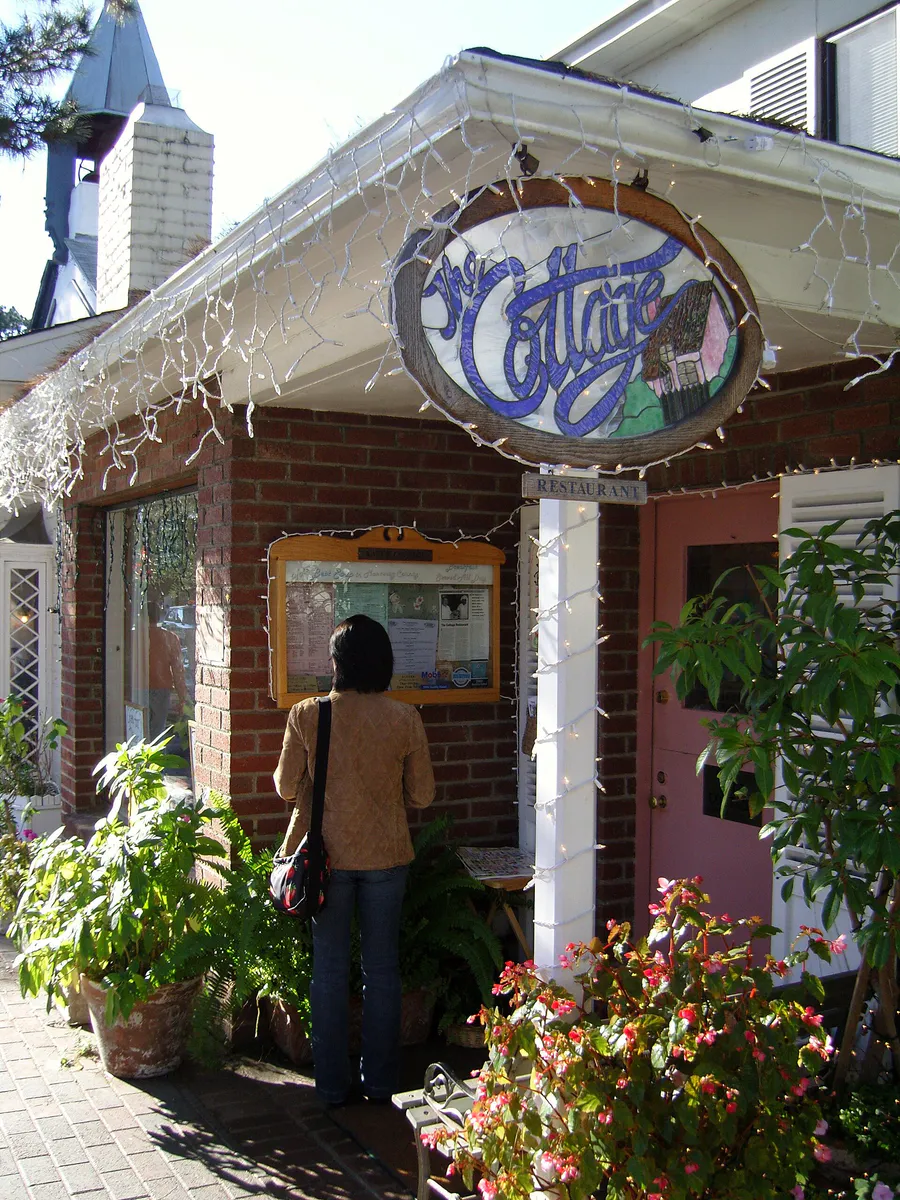
For places to eat in Carmel-by-the-Sea, start with Downtown / Central Business District or Hatton Fields depending on the kind of stop you want. Start with Downtown / Central Business District for boutique shopping, gallery hopping, wine tasting, and high-density dining. Hatton Fields is another area to consider. Features larger parcel sizes, single-family estate homes, and access to Mission Trail Nature Preserve, requiring a vehicle to reach downtown dining.
For independent, high-end dining, reserve weeks ahead at spots like Chez Noir or Aubergine, and ensure your table is set before 8:00 PM as kitchens close between 8:30 PM and 9:30 PM. For spontaneous mid-day dining, pick up artisan sandwiches from local delis or bakeries near Ocean Avenue for a beach lunch, or visit wine tasting rooms along San Carlos Street that permit casual walk-ins.
Still comparing options? Adventria can narrow the choice around budget, distance, vibe, and who you are with.
Decide with AdventriaPlan by situation
Start with the kind of plan you are actually trying to make. These city-specific ideas narrow the choice around who you are with, what you want to spend, the weather, and the kind of outing you want.
Combine afternoon wine tasting flights in hidden brick arcades with a scenic walk past Robinson Jeffers' handcrafted granite Tor House on Carmel Point. Follow with an early dinner reservation in the downtown core and an evening walk along the bluffs, or sit near an intimate hearth in a local hotel lounge.
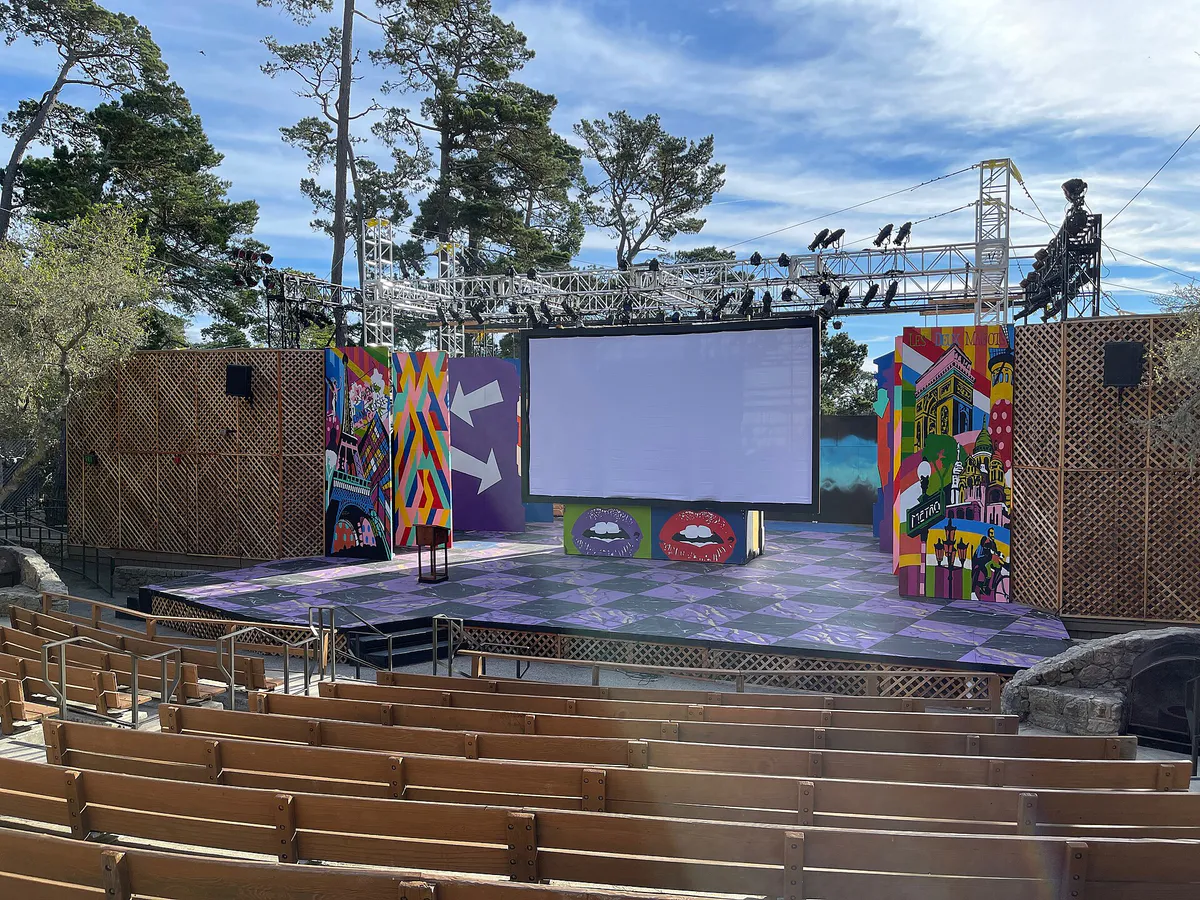
Take kids to Devendorf Park at Ocean and Junipero for open outdoor play (note that dogs are strictly banned from this park). Visit the Park Branch Children's Library at Mission Street and 6th Avenue, attend a family-friendly production by Pacific Repertory Theatre at Outdoor Forest Theater, and build sandcastles on Carmel Beach.
When rain sets in, tour the indoor museum galleries, basilicas, and historic courtyard exhibits at Carmel Mission. Alternatively, catch an indoor theatrical show at Golden Bough Playhouse or an orchestral concert at Sunset Cultural Center, using covered brick arcades to navigate downtown galleries without getting wet.
Carmel-by-the-Sea offers high-value free experiences: hike 5 miles of trails in Mission Trail Nature Preserve, walk the Scenic Bluff Path, tour the historic public architecture of the Harrison Memorial Library, and view fairytale cottages from public streets without spending a dime.
Enjoy a quiet, unstructured day browsing over 80 downtown art galleries, spending time in the historic reading rooms at Bernard Maybeck-designed Harrison Memorial Library, and taking peaceful hikes through Monterey pine and live oak groves in Mission Trail Nature Preserve.
Avoid bringing multiple cars into 2-hour downtown spots by parking together at the Sunset Center North Lot. Reserve group tasting flights along the Carmel Wine Walk in advance, or pack blankets and picnic baskets for an evening group theatrical performance at Outdoor Forest Theater under the pines.
For an outdoor plan from Carmel-by-the-Sea, compare trails, state parks, national parks within trip range, and scenic drives. Options in the current city guide include Carmel River State Beach and Monterey State Historic Park.
Outdoors nearby
Use these nearby outdoor options when the plan calls for a trail, protected landscape, park, or drive instead of another indoor stop. Proximity here is geographic, not a promise about driving time.
Get out of town
When staying in town is not the answer, these nearby destinations give you a smaller starting set for a day trip, overnight escape, or weekend away.
Destination relationships are screened geographically. Straight-line proximity is not presented as road mileage or estimated travel time.
Local landmarks & attractions
These notable destinations offer a starting point when you want something specific to see, visit, or build into a day around Carmel-by-the-Sea. Distances are approximate from the city area.
motorsport track in the United States
natural history museum in Pacific Grove, California
theater in Carmel-by-the-Sea, California
amusement park in Santa Cruz, California
non-profit organization in the USA
World War I Memorial Arch is a World War I memorial designed in 1919 by architect Charles Sumner Green and located at Ocean Avenue and San Carlos Street center median divider in Carmel-by-the-Sea, California.
movie theater in Monterey, California, United States
Notable places are selected from structured public destination data and ranked for relevance, prominence, proximity, and variety.
Local decision signals
A useful local recommendation depends on how the city actually works. These conditions affect where to go, what to do, and whether a plan makes sense right now.
Properties inside the incorporated village do not use street numbers; navigate using cross streets (e.g., Ocean Ave between Dolores and Lincoln) or assigned house names.
On-street parking in the central business district is free but limited to 30 minutes or 2 hours, strictly monitored via License Plate Recognition cameras mounted on patrol vehicles.
Wood bonfires and charcoal grills are strictly banned on Carmel Beach. Only user-supplied propane fire devices are allowed, restricted to the sand south of 10th Avenue.
Streetlights are prohibited in residential zones outside the core commercial blocks to preserve dark skies. Pedestrians require flashlights or mobile lights at night.
Dogs run off-leash on Carmel Beach under voice control, but are strictly prohibited in Devendorf Park and required to be on-leash at Carmel River State Beach.
Chain restaurants, fast-food franchises, and corporate gas stations are prohibited inside city limits. Commercial services reside along Carmel Valley Road.
Full-service restaurant kitchens generally close between 8:30 PM and 9:30 PM across the village core, even on weekends.
Neighborhood context
Neighborhoods are not interchangeable. Each area offers a different balance of atmosphere, transportation, food, nightlife, activities, and planning friction.
Best for: Boutique shopping, gallery hopping, wine tasting, and high-density dining
Anchored along Ocean Avenue between Junipero Avenue and Monte Verde Street. Features historic stone passageways, brick courtyards, over 80 art galleries, and dozens of wine tasting rooms, but faces strict 30-minute and 2-hour parking limits.
Best for: Walking tours past historic fairytale cottages and direct beach access
The premier residential quadrant south of Ocean Avenue and west of Junipero Avenue down to the bluffs. Characterized by dense Monterey pines, uncurbed streets, high architectural heritage, and an unlit dark-sky environment at night.
Best for: Quiet residential strolls near the northern perimeter of town
Situated north of Ocean Avenue and west of Junipero Avenue. A densely wooded neighborhood featuring traditional coastal cottages, mid-century homes, and quiet uncurbed streets within reasonable walking distance to northern downtown blocks.
Best for: Historic sightseeing, quiet park walks, and southern valley entry
Located in southern Carmel around the historic Carmel Mission San Carlos Borromeo. Transitions into low-density residential streets bordering the Carmel River plain and provides entry points to Mission Trail Nature Preserve.
Best for: Coastal walking loops, dramatic ocean views, and double-beach access
A coastal wedge south of Santa Lucia Avenue extending to the mouth of the Carmel River. Features Scenic Road's coastal loop, Tor House, and direct frontage on both Carmel Beach and Carmel River State Beach.
Best for: Suburban estate living and direct hillside trail access
Situated east of Highway 1 on the hillside above the village. Features larger parcel sizes, single-family estate homes, and access to Mission Trail Nature Preserve, requiring a vehicle to reach downtown dining.
Best for: Suburban errands, chain services, hardware, and groceries
Located south of city limits along Rio Road and Carmel Rancho Boulevard (including The Crossroads Carmel and The Barnyard). Houses practical amenities and formula retail not permitted within the village core.
Explore your options
Carmel-by-the-Sea maintains strict local codes to protect its village character and natural environment. Review these crucial rules before setting out.
Carmel Beach bans wood bonfires and charcoal grills. Only portable, UL-listed propane devices are permitted south of 10th Avenue.
Downtown curbside parking is free but strictly enforced by electronic License Plate Recognition (LPR) cameras on police vehicles.
Dog regulations vary drastically depending on the specific park or beach zone you are visiting.
Carmel Municipal Code Section 8.44 restricts high heels to prevent trip-and-fall injuries on root-distorted sidewalks.
Practical local guidance
To avoid 2-hour time limits and frequent spot-cycling in the Central Business District, park in these designated free public lots and unrestricted zones.
A simpler way to decide
Executing a seamless evening in Carmel-by-the-Sea requires preparing for early kitchen closures, dark streets, and parking windows.
Before driving into town, identify your location using cross streets (e.g., Dolores Street between 5th and 6th Avenues) rather than searching for numerical street addresses.
Avoid 2-hour commercial parking citations by leaving your vehicle in the free Vista Lobos Lot or Sunset Center North Lot if your stay extends into the evening.
Book dinner tables between 6:00 PM and 7:30 PM. Full-service restaurant kitchens close early across the village, generally between 8:30 PM and 9:30 PM.
Because residential streets have no streetlights and feature uneven tree-root brick pavers, carry a light source and wear flat walking shoes.
After dinner, head directly to a performance at Sunset Cultural Center, a play at Outdoor Forest Theater, or a fireside drink at a hotel hearth like Cypress Inn.
Common local questions
These are common situations people face when trying to decide where to eat, what to do, where to get drinks, or how to spend their time in Carmel-by-the-Sea.
Carmel-by-the-Sea planning questions
Practical answers for people deciding where to eat, what to do, where to go, or how to make plans in Carmel-by-the-Sea.
Properties inside the incorporated city do not have numerical street addresses. Locations are identified by cross streets and side of the street (e.g., 'Dolores between 5th and 6th, east side') or by historical cottage names (e.g., 'Sea Urchin'). Mail is picked up centrally at the Post Office at 5th and Dolores.
Carmel Municipal Code Section 8.44 technically prohibits shoes with heels higher than 2 inches or with a bearing surface under 1 square inch without a permit. Designed to protect the city from liability regarding trip-and-fall incidents on tree-root-distorted sidewalks, free novelty permits are available at City Hall or the Police Department.
No. Under Carmel Municipal Code Section 6.08.040, dogs are strictly prohibited in Devendorf Park at Ocean and Junipero Avenues, even on-leash. However, dogs are permitted off-leash under voice control on Carmel Beach and in Mission Trail Nature Preserve.
Wood-burning bonfires and charcoal grills are strictly banned on Carmel Beach. Visitors are permitted to use user-supplied, UL-listed propane fire devices year-round, restricted strictly to the sand south of 10th Avenue and placed at least 25 feet from the bluff base.
Curbside parking on commercial streets is free but limited to 30 minutes or 2 hours between 8:00 AM and 6:00 PM. Police enforcement vehicles use License Plate Recognition (LPR) cameras to track vehicles. Moving a car to another spot on the same block does not reset the enforcement clock.
Free unlimited parking is available at the Vista Lobos Lot (Torres between 3rd and 4th), Sunset Center North Lot (8th between Mission and San Carlos), the center median of Junipero Avenue (3rd to 5th), and the Del Mar Lot at the base of Ocean Avenue.
Full-service dinner kitchens close early, typically between 8:30 PM and 9:30 PM. Very few kitchens serve food past 9:30 PM, making advance reservations essential for late-evening dining.
Yes, open alcohol consumption is permitted on the sand at Carmel Beach between 7:00 AM and 10:00 PM for adults 21 years of age and older. Alcohol remains strictly prohibited on streets, bluffs, and beach access stairways.
Monterey-Salinas Transit (MST) operates Line 24 (Monterey – Carmel) from the Carmel Transit Hub at 6th Avenue and San Carlos Street directly to Downtown Monterey and the Monterey Bay Aquarium.
Summer (June–August) brings morning coastal fog ('June Gloom') and cooler temperatures in the 50s–60s°F, requiring layered windbreakers or fleece. Fall (September–November) is the 'Secret Season'—the sunniest, warmest time of year with temperatures reaching the 70s°F.
Source transparency
Official and locally relevant sources used to verify the practical information presented in this Carmel-by-the-Sea decision guide.
Carmel-by-the-Sea decision engine
Tell Adventria what kind of experience you want, set your practical limits, and turn the options in Carmel-by-the-Sea into one workable plan.
Choose a Carmel-by-the-Sea Plan